

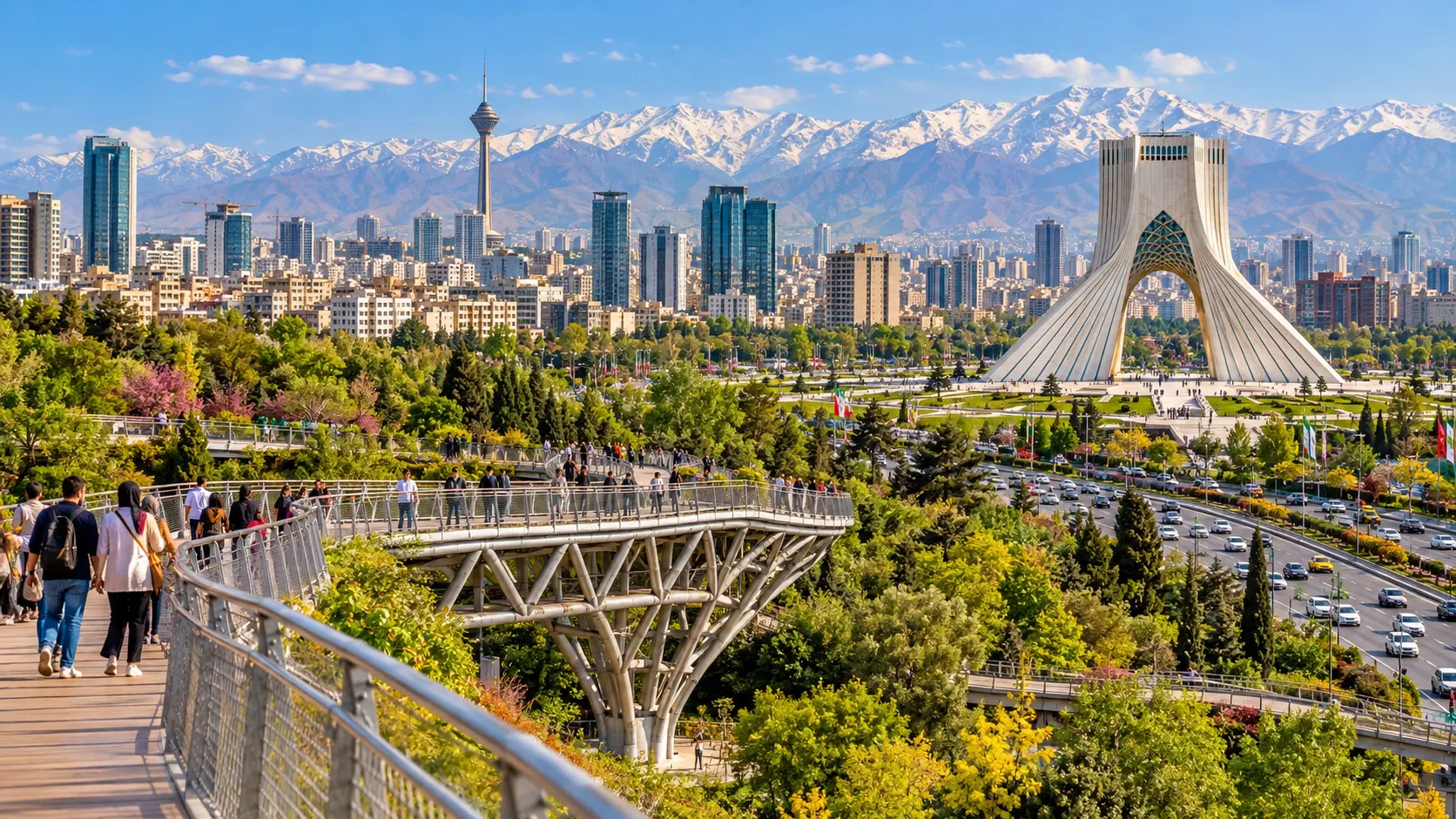
Tehran is a fascinating introduction to modern Iran, blending busy streets, mountain scenery, historic neighborhoods, museums, parks, and lively markets. The capital sits beneath the Alborz Mountains, giving travelers a striking contrast between urban energy and dramatic natural landscapes. From grand palaces to contemporary bridges, Tehran has plenty to explore for different travel styles.
The city feels expansive, energetic, and distinctly metropolitan, yet quieter corners appear between major avenues and crowded commercial districts. Travelers can spend a morning exploring museums, an afternoon walking through a traditional bazaar, and an evening enjoying views toward the mountains. This mixture makes Tehran especially interesting for visitors who enjoy culture, architecture, history, and everyday city life.
Tehran can also work well as a starting point for exploring northern Iran and other major destinations. Its extensive urban transport network helps visitors move between central attractions and northern districts. A thoughtful Tehran itinerary usually combines major landmarks with relaxed neighborhood walks, local food experiences, green spaces, and time to simply observe the rhythm of the capital.
Explore Golestan Palace
Golestan Palace is one of Tehran’s most remarkable historic attractions and a memorable stop for anyone interested in Iranian architecture. The complex contains elegant halls, decorative tilework, mirrored interiors, gardens, and carefully designed courtyards. Its detailed craftsmanship reflects several periods of Iran’s royal and architectural history.
Walking through the palace complex gives travelers a chance to appreciate details that can be missed when moving quickly. Look closely at the colorful tiles, ornamental ceilings, carved surfaces, and reflective interiors. The combination of Persian design traditions and later architectural influences makes the site particularly valuable for photographers and architecture enthusiasts.
Set aside enough time to explore the complex rather than treating it as a quick photo stop. Its central location also makes it convenient to combine with other attractions around Tehran’s historic core. A visit here fits naturally into a Tehran sightseeing itinerary focused on heritage, architecture, and the city’s older urban districts.
Walk Through Tehran Grand Bazaar
Tehran Grand Bazaar is one of the city’s most energetic places to experience everyday commercial life. Its covered passages stretch through a maze of shops, corridors, food stalls, and traditional businesses. Even visitors who are not interested in shopping can enjoy the atmosphere, architecture, movement, and people-watching.
The bazaar is especially interesting for travelers who want to see a different side of Tehran beyond formal museums and major monuments. Narrow passageways lead into different commercial sections, while vendors and shoppers create a constantly changing urban scene. Keep your belongings secure and allow yourself time to wander without rushing from one area to another.
The surrounding neighborhood also makes the bazaar a useful starting point for exploring central Tehran. Consider visiting earlier in the day when commercial activity is lively and temperatures are often more comfortable. Comfortable walking shoes are useful because exploring the bazaar and nearby streets can involve considerable time on foot.
Visit the National Museum of Iran
The National Museum of Iran is an essential stop for travelers interested in the country’s long and complex history. Its collections span ancient civilizations, archaeological discoveries, sculptures, pottery, tools, and objects connected with different periods. The museum gives useful historical context before visiting many other cultural attractions around Tehran.
Allow plenty of time because the collections cover a broad range of eras and artistic traditions. Reading selected descriptions can make the exhibits easier to understand, especially for visitors unfamiliar with Iranian archaeology. The museum is also a practical choice for hot afternoons when indoor sightseeing feels more comfortable.
A visit here pairs naturally with the Grand Bazaar and other attractions in central Tehran. Rather than rushing through every room, focus on the sections that match your interests and leave enough energy for the rest of the day. History enthusiasts can easily spend several hours exploring the displays and architectural details.
See the Azadi Tower
Azadi Tower is one of Tehran’s most recognizable landmarks and an important symbol of the city’s modern architectural identity. Its sweeping geometric form combines traditional Persian-inspired elements with a distinctly modern structure. The tower stands within a large urban plaza and is particularly striking when viewed from different angles.
Visitors can spend time around the surrounding square to appreciate the tower’s proportions and architectural details. Its location also makes it useful for understanding how Tehran’s major roads and neighborhoods connect across the western side of the city. Photography is especially appealing here because the tower changes character with different perspectives and lighting.
The Azadi area can fit into a broader Tehran sightseeing day without requiring a long visit. Pairing it with a museum or another western Tehran attraction can make transportation more efficient. If your schedule is flexible, visiting around late afternoon can make the surrounding environment more pleasant for walking and photography.
Walk Across Tabiat Bridge
Tabiat Bridge is a standout piece of contemporary architecture and one of the most enjoyable places to experience Tehran from above. The pedestrian bridge connects two large green areas and gives walkers broad views across roads, trees, buildings, and the northern skyline. Its layered design encourages visitors to slow down and explore.
The bridge is more than a crossing point because it includes spaces where people can pause, take photographs, and enjoy the surrounding landscape. From certain viewpoints, the Alborz Mountains form an impressive backdrop behind the city. The experience feels particularly different from visiting Tehran’s historic attractions, making it a useful addition to a balanced itinerary.
Try visiting later in the day when the atmosphere becomes more relaxed and the city begins to change with the evening light. The nearby parks make it easy to extend your walk after crossing the bridge. Tabiat Bridge is also a good choice for travelers seeking modern Tehran rather than focusing entirely on historic architecture.
Spend Time in Sa’dabad Complex
Sa’dabad Complex sits in the northern part of Tehran and combines historic residences, gardens, tree-lined paths, and several museums. The setting feels noticeably different from the dense central districts, with more greenery and a closer connection to the foothills. It is an appealing destination for travelers interested in architecture, history, and peaceful outdoor spaces.
The complex contains multiple buildings with different architectural features and collections. Rather than trying to rush through everything, choose the sections that best match your interests and leave time for the surrounding grounds. The gardens themselves are worth experiencing because they add a slower, more relaxed dimension to Tehran sightseeing.
Northern Tehran can feel cooler than the central parts of the city, particularly during suitable seasons. Sa’dabad works well alongside other attractions in the northern districts, helping reduce unnecessary travel across the city. Visitors interested in historic residences, decorative interiors, and landscaped grounds can easily make this a substantial part of their day.
Discover Niavaran Palace Complex
Niavaran Palace Complex is another major cultural attraction in northern Tehran, featuring historic buildings, landscaped grounds, and collections connected with Iran’s modern royal period. The architecture varies across the complex, giving visitors an opportunity to see different design approaches within one destination. Its spacious grounds also make the visit less hectic than central Tehran sightseeing.
The main buildings contain interiors, furnishings, artwork, and decorative details that help explain how the residences were used. Architecture enthusiasts may particularly enjoy comparing the different structures and their interior styles. Photography is another appealing part of the visit, especially around the gardens and exterior spaces.
Niavaran can be combined with other northern Tehran attractions during the same day. Planning the route can reduce time spent traveling through the city’s busy roads. For visitors with an interest in modern Iranian history, architecture, and landscaped estates, the complex adds useful depth to a Tehran travel itinerary.
Enjoy Darband and the Alborz Foothills
Darband is a popular northern Tehran area known for its mountain setting, walking paths, restaurants, streams, and lively atmosphere. The landscape changes quickly as the urban environment gives way to rocky slopes and greener surroundings. It is a refreshing destination for travelers who want a break from Tehran’s dense streets and traffic.
The area is particularly enjoyable for a relaxed walk, although some paths become steeper as they continue toward the mountains. Comfortable footwear is important if you plan to explore beyond the busiest restaurant areas. Visitors can take their time, enjoy the scenery, and experience a more leisurely side of Tehran without leaving the city.
Darband works especially well in an itinerary that includes northern Tehran attractions. Going earlier can make the walking experience calmer, while later hours can bring a livelier atmosphere around dining areas. The combination of mountain scenery, local food, walking routes, and urban proximity makes Darband a distinctive Tehran experience.
Explore Tehran’s Museums and Art Scene
Tehran has a strong museum culture, making the city appealing to travelers who enjoy art, design, history, and photography. Beyond its major historical museums, visitors can explore institutions dedicated to contemporary art and other cultural collections. Spending time indoors can also be useful during particularly warm or cold parts of the day.
The Tehran Museum of Contemporary Art is especially notable for visitors interested in modern and contemporary artistic traditions. Its architectural design and surrounding setting add another layer to the experience. Museum schedules can vary, so checking current opening information before visiting is a sensible part of trip planning.
Tehran’s cultural attractions work best when balanced with outdoor exploration rather than packed into a single day. Choose museums according to your interests and allow enough time to appreciate the exhibits without rushing. Combining one major museum with a nearby neighborhood walk can make the day feel more relaxed and manageable.
Discover Tehran’s Parks and Green Spaces
Tehran’s parks give travelers a chance to slow down between busy sightseeing stops. Large green spaces can be found across different parts of the city, with walking paths, trees, open areas, and places where residents spend time outdoors. These spaces reveal a more relaxed side of everyday Tehran.
Mellat Park is among the city’s well-known green areas and works nicely for a casual walk. Jamshidieh Park, located farther north, has a more rugged setting with stone paths and views toward the surrounding mountains. Choosing between them depends on whether you prefer a spacious urban park or a more elevated landscape.
Green spaces are particularly useful when planning a multi-day Tehran trip because they break up museum visits and crowded commercial areas. Visit during comfortable weather and give yourself time to walk without following a strict schedule. Parks can also be enjoyable locations for observing local routines and taking a quiet pause during a busy travel day.
Try Tehran’s Local Food
Tehran’s food scene reflects the broader culinary traditions of Iran while adding the variety expected from a huge capital city. Travelers can find rice dishes, grilled meats, stews, breads, fresh herbs, and regional specialties across different neighborhoods. Exploring local restaurants is a practical way to add another dimension to a Tehran vacation.
Kababs and rice dishes are familiar choices for many visitors, while dishes such as ghormeh sabzi and fesenjan introduce richer combinations of herbs, vegetables, nuts, and slow-cooked ingredients. Street snacks and traditional sweets can also add variety between major meals. Portions can be generous, so sharing dishes can make it easier to sample different flavors.
For a more memorable food experience, pay attention to restaurants busy with local diners and choose places that fit your comfort level. Food markets and traditional dining areas can be especially interesting for travelers who enjoy observing local habits. Trying several regional flavors during your stay can make Tehran’s culinary culture a highlight of the trip.
Best Time to Visit Tehran
Tehran experiences noticeable seasonal differences, so the best time for sightseeing depends partly on your preferred weather. Spring and autumn are generally appealing for walking, sightseeing, and exploring outdoor attractions. Summer can become quite warm, while winter may bring colder conditions and occasional poor air quality.
Spring can be particularly pleasant for parks, gardens, bridges, and northern neighborhoods. Autumn brings cooler temperatures and changing colors in some green areas, making longer walks more comfortable. Travelers planning extensive outdoor sightseeing should consider these seasonal differences when deciding how many days to spend in Tehran.
Weather and air conditions can change from day to day, so flexibility is useful. Keep indoor attractions available as alternatives when outdoor conditions become uncomfortable. A balanced Tehran itinerary should mix museums, historic sites, parks, food experiences, and neighborhood exploration so your plans remain practical across different weather conditions.
Getting Around Tehran
Tehran is a huge metropolitan area, and distances between attractions can be greater than they initially appear. The metro is useful for reaching many central districts, while taxis and ride-hailing services can help with routes that are less convenient by public transportation. Planning each day around nearby attractions can save considerable travel time.
Traffic is an important part of Tehran travel planning, particularly during busy periods. A destination that appears close on a map can take much longer by road than expected. Using the metro when practical and grouping attractions by neighborhood can make sightseeing more efficient and less tiring.
Walking works well in compact areas such as parts of central Tehran, especially around historic attractions and commercial districts. For longer journeys, combine public transportation with short walks or taxi rides. Keep your daily schedule flexible because Tehran’s scale and traffic can make rigid timing difficult.
Where to Stay in Tehran
Choosing the right neighborhood can make a noticeable difference to your Tehran experience. Central areas can be convenient for historic attractions, museums, bazaars, and transportation connections, while northern districts may appeal to travelers who prefer greener surroundings and easier access to mountain areas. Your sightseeing priorities should guide the location you choose.
Central Tehran is practical for visitors focused on cultural landmarks and historic neighborhoods. Northern Tehran can feel more spacious and gives easier access to destinations such as Darband, Sa’dabad, and Niavaran. Before booking accommodation, consider transportation, nearby restaurants, walking convenience, and how much time you expect to spend in different parts of the city.
For a first visit, staying somewhere with convenient access to public transportation can simplify daily travel. Accommodation styles range from hotels and guesthouses to other short-stay options, depending on availability and local regulations. Reading recent traveler information before booking can help you understand location, facilities, and practical conditions.
How Many Days Do You Need in Tehran?
Three days can be enough for a focused introduction to Tehran, especially if your itinerary prioritizes major landmarks and museums. One day can focus on central Tehran, another on northern attractions, and another on modern architecture, parks, and relaxed neighborhood exploration. This approach keeps the schedule varied without making every hour feel rushed.
With four or five days, travelers can explore at a slower pace and spend more time in museums, markets, parks, and food districts. Extra time also allows greater flexibility if traffic, weather, or opening schedules affect your plans. Longer stays are particularly useful for travelers who enjoy observing local city life rather than visiting attractions quickly.
Tehran can also serve as a base before continuing to other parts of Iran. If you have a broader Iran itinerary, avoid packing every Tehran attraction into a single day. A relaxed schedule can make the capital easier to understand and leaves room for unexpected discoveries during neighborhood walks.
Practical Tehran Travel Tips
Tehran rewards travelers who plan around geography, transportation, weather, and opening times. Keep important documents secure, carry only what you need during sightseeing, and leave some flexibility between major stops. Comfortable clothing and walking shoes can make long days across the city much easier.
Cash access, payment methods, mobile connectivity, and accommodation arrangements are practical details worth checking before arrival because circumstances can vary. Travelers should also confirm current entry requirements and local regulations before planning their trip. Keeping digital and physical copies of important travel documents is a sensible precaution.
Most importantly, give yourself time to experience Tehran beyond its headline attractions. Sit in a park, explore a neighborhood, visit a local café, or spend extra time examining architectural details. The city becomes more interesting when sightseeing is balanced with ordinary moments and slower exploration.
Conclusion
Tehran is a large, varied capital where historic architecture, museums, modern landmarks, mountain scenery, markets, parks, and local food come together. Highlights such as Golestan Palace, the Grand Bazaar, Tabiat Bridge, Azadi Tower, Sa’dabad, Niavaran, and Darband reveal very different sides of the city.
A successful Tehran itinerary does not need to feel rushed. Group attractions by neighborhood, use public transportation when practical, allow extra time for traffic, and keep your schedule flexible. Mixing cultural attractions with parks, food experiences, and relaxed walks can make your trip more comfortable and memorable.
Whether you have three days or nearly a week, Tehran has enough variety to support a rich urban adventure. Its scale may feel overwhelming at first, but thoughtful planning makes the city easier to navigate. Take time to explore beyond the major landmarks, and Tehran can become one of the most distinctive stops on an Iran journey.
FAQs
Is Tehran worth visiting for tourists?
Yes, Tehran is worth visiting for travelers interested in Iranian history, architecture, museums, food, urban culture, and mountain scenery. Its large size means planning by neighborhood can make sightseeing much easier.
What are the best places to see in Tehran?
Popular attractions include Golestan Palace, Tehran Grand Bazaar, the National Museum of Iran, Azadi Tower, Tabiat Bridge, Sa’dabad Complex, Niavaran Palace Complex, and Darband.
How many days are enough for Tehran?
Three days can cover many major attractions, while four or five days allow a more relaxed experience. Extra time is useful for museums, parks, food experiences, and northern Tehran.
What is the best time to visit Tehran?
Spring and autumn are generally comfortable for sightseeing and outdoor activities. Summer can be hot, while winter may bring colder weather and occasional air-quality concerns.
Is Tehran easy to explore without a car?
Yes, although the city is very large. The metro, taxis, walking routes, and other local transportation options can work well when attractions are grouped by neighborhood.