

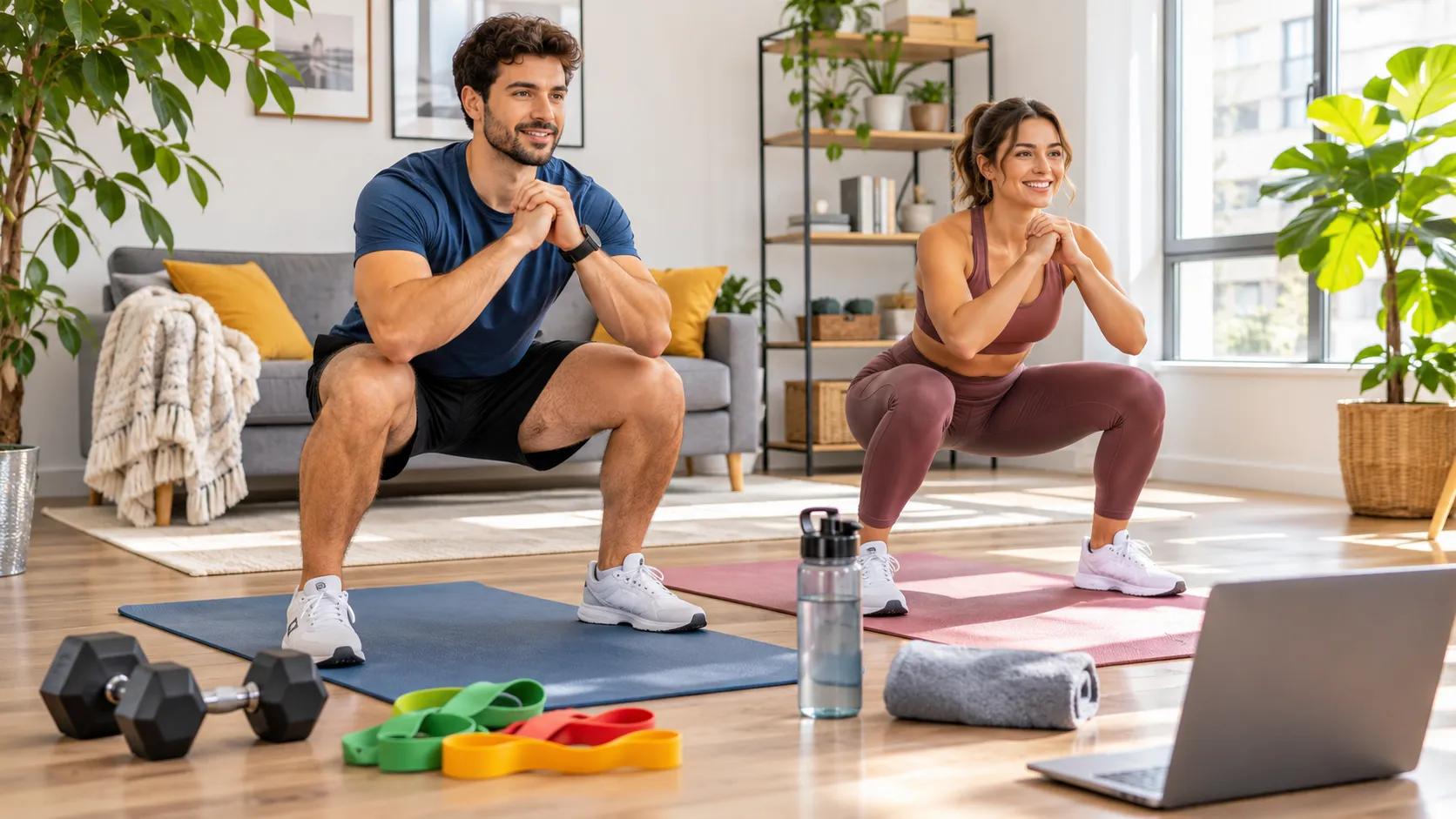
Starting a fitness journey does not require an expensive gym membership, advanced equipment, or complicated exercises. Workout routines for beginners at home provide a simple way to improve strength, flexibility, balance, and overall physical fitness. With a little space and a realistic plan, you can build healthy exercise habits without leaving your house.
The key to successful home workouts is learning proper techniques, starting at a comfortable level, and gradually improving your abilities. Beginners should focus on controlled movements rather than challenging exercises that may be difficult to perform correctly. This guide explains how to create a beginner-friendly workout routine, perform essential exercises, avoid common mistakes, and maintain long-term consistency.
Why Home Workouts Are Great for Beginners
Home workouts offer a convenient starting point for people who want to become more physically active. You can exercise whenever your schedule allows without traveling to a fitness center or purchasing expensive equipment. Basic movements such as squats, wall push-ups, and gentle stretching require very little space. This accessibility makes developing a consistent exercise routine much easier.
Another advantage of exercising at home is the freedom to move at your own pace. Beginners can practice unfamiliar movements without feeling rushed or pressured to match someone else’s abilities. You can take breaks, adjust exercises, and repeat movements until they feel more comfortable. This flexible environment supports gradual improvement while allowing you to develop confidence.
Home exercise routines can also provide several physical and mental health benefits. Regular movement supports muscle strength, joint mobility, cardiovascular fitness, and everyday energy levels. Physical activity may also improve mood, sleep quality, and overall well-being. However, these benefits develop through consistent habits, so choosing manageable activities is more important than attempting difficult workouts immediately.
How to Prepare for Your First Home Workout
Before starting a home workout, choose a comfortable area with enough space to move safely. Remove obstacles, secure loose rugs, and make sure the floor provides reliable traction. A yoga mat can be helpful for exercises performed on the ground, but it is not always necessary. Good lighting and ventilation can also improve your exercise experience.
Comfortable clothing allows your body to move naturally during different exercises. Choose breathable fabrics and supportive footwear appropriate for the activities you plan to perform. Keep drinking water nearby and avoid exercising in excessively hot or uncomfortable conditions. Preparing these simple essentials beforehand helps you concentrate on your movements without unnecessary distractions.
It is also important to understand your current fitness level before choosing a routine. Start with exercises that feel manageable and allow you to maintain control throughout each movement. If you have an injury, ongoing pain, or a medical condition affecting exercise, seek guidance from a qualified healthcare professional. Setting realistic expectations helps create a safer beginning.
Start Every Workout With a Gentle Warm-Up
A proper warm-up prepares your body for exercise by gradually increasing movement and circulation. It helps you transition from resting activities into more active movements without suddenly demanding intense effort. Beginners can start with three to five minutes of gentle activity and adjust the duration as needed. The goal is to feel comfortably prepared rather than tired.
Walking in place is one of the easiest warm-up activities for home workouts. Begin with slow steps, gently swing your arms, and gradually increase your pace while remaining comfortable. You can also try shoulder circles, ankle movements, and easy side steps to mobilize different joints. These simple exercises help introduce movement before your main routine.
Dynamic movements can also prepare muscles for basic strength exercises. Try controlled arm circles, gentle hip movements, and shallow squats that stay within a comfortable range. Avoid forcing joints into uncomfortable positions or bouncing aggressively during stretches. A good warm-up should leave you feeling ready for activity while keeping your breathing steady and relaxed.
Easy Full-Body Workout Routine for Beginners
A beginner full-body workout can include several simple movements that target different muscle groups. Start with chair squats, wall push-ups, glute bridges, and standing calf raises. Perform approximately six to ten controlled repetitions of each exercise, adjusting the number to your ability. One comfortable round is enough when you are first learning these movements.
Begin with chair squats to practice bending your knees and hips while maintaining balance. Continue with wall push-ups to strengthen your upper body without placing excessive pressure on your arms. Next, perform glute bridges on a comfortable surface to activate your hip muscles. Finish with standing calf raises while using stable support when needed.
Take short breaks between exercises so you can maintain comfortable breathing and proper technique. A beginner session may take around fifteen to twenty minutes, including a warm-up and cool-down. If the routine feels difficult, reduce repetitions or practice fewer movements during your first sessions. Gradually build confidence before adding additional exercises or rounds.
Best Lower-Body Exercises for Beginners
Lower-body exercises help strengthen the muscles used for standing, walking, climbing stairs, and maintaining balance. Chair squats are an excellent starting point because they provide a clear movement target and optional support. Stand in front of a stable chair, bend your hips and knees slowly, and lower yourself toward the seat. Return to standing using controlled movements.
Glute bridges are another beginner-friendly exercise that strengthens the muscles around your hips. Lie on your back with your knees bent and your feet resting comfortably on the floor. Gently lift your hips while keeping your shoulders grounded and avoiding excessive back arching. Lower your hips slowly and repeat the movement without rushing.
Standing calf raises can improve lower-leg strength and support everyday walking movements. Stand upright near a stable countertop or chair, then gently lift your heels while keeping your balance. Lower them slowly until your feet return to the floor. Focus on smooth movements rather than lifting as high or as quickly as possible.
Simple Upper-Body Exercises You Can Do at Home
Upper-body strength exercises support everyday activities such as carrying objects, opening doors, and maintaining comfortable movement. Wall push-ups are particularly useful for beginners because they reduce the difficulty of traditional floor push-ups. Stand facing a wall with your hands positioned around shoulder height. Bend your elbows slowly, move toward the wall, and gently push yourself backward.
Incline push-ups offer another option when wall push-ups become comfortable. Place your hands on a sturdy, immovable surface that can safely support your body weight. Keep your body aligned as you bend your elbows and return to the starting position. A higher surface generally makes the exercise easier, while a lower surface increases difficulty.
You can also include gentle shoulder and arm movements to improve mobility and muscular control. Standing arm raises involve slowly lifting your arms within a comfortable range before lowering them again. Keep your shoulders relaxed and avoid forcing movements that cause discomfort. Combining these activities with pushing exercises creates a simple introduction to upper-body training.
Beginner Core Exercises for Better Stability
Core exercises strengthen muscles that support your trunk during everyday movements and physical activities. A strong, coordinated core can contribute to balance, posture, and movement control. Beginners should focus on stability rather than attempting complicated abdominal exercises immediately. Gentle movements such as bird dogs and dead bugs provide accessible options for learning core engagement.
To perform a bird dog, begin on your hands and knees on a comfortable surface. Slowly extend one arm and the opposite leg while keeping your trunk as steady as possible. Return to the starting position and repeat on the other side. You can simplify the movement by extending only an arm or leg at first.
The dead bug exercise is another useful way to practice controlled core movement. Lie on your back with your knees bent and arms raised, then slowly move one arm or leg while keeping your back comfortable. Return to the original position before changing sides. Prioritize steady breathing and control instead of extending farther than your mobility allows.
Low-Impact Cardio Workouts for Beginners
Cardiovascular exercise supports heart health, breathing efficiency, and overall physical endurance. Beginners do not need complicated machines or intense workouts to introduce cardio activities at home. Walking in place, gentle dancing, and comfortable side steps can provide an accessible starting point. The most effective activity is one you can perform regularly without unnecessary strain.
Marching in place is a simple cardio movement that requires no special equipment. Stand upright, lift your feet alternately, and move your arms naturally while maintaining a comfortable rhythm. Begin with a few minutes and increase the duration gradually as your stamina improves. You should generally be able to speak comfortably during moderate-intensity activity.
You can also create a short cardio sequence using different low-impact movements. Alternate between marching, side stepping, and gentle step touches, with comfortable breaks whenever needed. Avoid movements that cause pain, dizziness, or unusual breathlessness. Combining low-impact cardio with basic strength exercises can help create a balanced home fitness routine.
Stretching and Cooling Down After Exercise
A cool-down allows your body to transition gradually from exercise to a resting state. After finishing your routine, walk slowly around the room or march gently in place for a few minutes. Allow your breathing and heart rate to settle naturally before stopping completely. This simple habit provides a comfortable ending to your workout session.
Gentle stretching can help maintain flexibility and provide an opportunity to notice areas of stiffness. You might stretch your calves, shoulders, thighs, and hips after completing your main exercises. Move into each stretch slowly and remain within a comfortable range of motion. Avoid bouncing or forcing a position, especially when your muscles feel tired.
Stretching should feel controlled rather than painful or excessively intense. Hold a comfortable position briefly while breathing normally, then release it gently without sudden movements. If a particular stretch causes discomfort, modify it or choose another option. Making time for gentle recovery helps create a more balanced exercise experience and encourages consistent participation.
A Simple Weekly Workout Schedule for Beginners
Creating a weekly workout schedule helps turn occasional exercise into a regular habit. Beginners can start with two or three manageable strength sessions each week, allowing recovery between similar workouts. Gentle walking, stretching, or recreational movement can fill other days when enjoyable. Your schedule should support daily responsibilities rather than become a source of pressure.
For example, Monday could include a short full-body routine with squats, wall push-ups, and glute bridges. Tuesday could focus on comfortable walking or gentle mobility, while Wednesday could include another strength session. Thursday might be a rest day, followed by an optional activity on Friday. Weekends can include relaxed outdoor movement, recreation, or additional recovery.
Your ideal schedule depends on your fitness background, available time, energy levels, and personal preferences. Some beginners benefit from short sessions, while others prefer slightly longer workouts with additional breaks. There is no need to follow the same plan every week when circumstances change. Flexibility makes exercise easier to maintain as part of everyday life.
Common Beginner Workout Mistakes to Avoid
One common mistake is attempting exercises that are too difficult before learning basic movement techniques. Beginners sometimes rush through repetitions or focus on completing large numbers rather than maintaining proper control. Poor technique can make movements uncomfortable and reduce their usefulness. Start with manageable variations and increase difficulty only when your form remains consistent.
Another mistake involves ignoring recovery and trying to complete demanding workouts every day. Muscles and other tissues need appropriate rest after challenging activity, especially when movements are unfamiliar. Include comfortable recovery periods and pay attention to unusual fatigue or persistent discomfort. Rest days are a normal and valuable part of a healthy exercise routine.
Beginners may also become discouraged when progress feels slower than expected. Fitness improvements are not always obvious after a few sessions, and everyone’s starting point is different. Avoid comparing your abilities with other people or focusing only on appearance-related results. Instead, notice improvements in movement confidence, comfort, coordination, and your ability to complete everyday activities.
How to Stay Consistent With Home Workouts
Consistency becomes easier when your fitness routine fits naturally into your existing schedule. Choose a time when you generally feel comfortable exercising and have fewer interruptions. You might prefer a short morning session, an afternoon movement break, or an evening routine. Establishing a familiar pattern can reduce the effort required to begin each workout.
Setting small, achievable goals can also help maintain motivation. You might focus on learning a new movement, improving balance, or completing a comfortable workout several times each week. Keep a simple record of activities you enjoy and techniques you want to improve. Celebrating practical progress encourages a positive relationship with physical activity.
Variety can prevent home workouts from feeling repetitive over time. Alternate between bodyweight exercises, gentle cardio, stretching, and enjoyable activities such as dancing or walking. Adjust your plan when school, work, family commitments, or tiredness affect your schedule. A sustainable workout routine should support your well-being rather than require perfection every day.
Conclusion
Workout routines for beginners at home provide a convenient way to become more active and develop essential fitness skills. You can begin with simple bodyweight movements, comfortable cardio activities, and gentle stretching without purchasing specialized equipment. Learning proper exercise techniques helps you build confidence while reducing unnecessary strain. Starting with manageable activities creates a foundation for future progress.
A balanced home workout plan should include strength exercises, cardiovascular movement, mobility work, and appropriate recovery. Warm-ups prepare your body for activity, while cool-downs help you finish each session comfortably. Paying attention to technique and allowing enough rest are important parts of the process. Gradual progression is more sustainable than attempting difficult exercises too quickly.
The best beginner home workout is one that feels safe, enjoyable, and realistic for your lifestyle. Focus on developing healthy movement habits rather than following overly demanding schedules or unrealistic expectations. Adjust exercises according to your abilities and recognize improvements beyond physical appearance. With consistency and patience, home workouts can become a valuable part of everyday well-being.
FAQs
What Is the Best Workout Routine for Beginners at Home?
A beginner-friendly routine combines simple movements such as chair squats, wall push-ups, glute bridges, and gentle walking. Start with manageable repetitions, practice correct technique, and gradually adjust your routine as your strength improves.
How Long Should a Beginner Work Out at Home?
Beginners can start with approximately fifteen to twenty minutes, including warm-up and cool-down activities. The appropriate duration depends on fitness level, exercise intensity, and comfort, so shorter sessions are also useful.
Can Beginners Exercise at Home Without Equipment?
Yes, many beginner exercises require no special equipment. Bodyweight movements such as squats, wall push-ups, glute bridges, and bird dogs can help improve strength, coordination, and stability using simple household space.
How Many Days a Week Should Beginners Work Out?
Beginners can start with two or three manageable strength sessions weekly, allowing recovery between challenging workouts. Comfortable walking, stretching, and enjoyable recreational activities can provide additional movement throughout the week.
What Should Beginners Avoid During Home Workouts?
Beginners should avoid rushing movements, ignoring pain, skipping warm-ups, and increasing exercise difficulty too quickly. Focus on proper technique, appropriate recovery, and realistic goals to develop safe and sustainable fitness habits.