

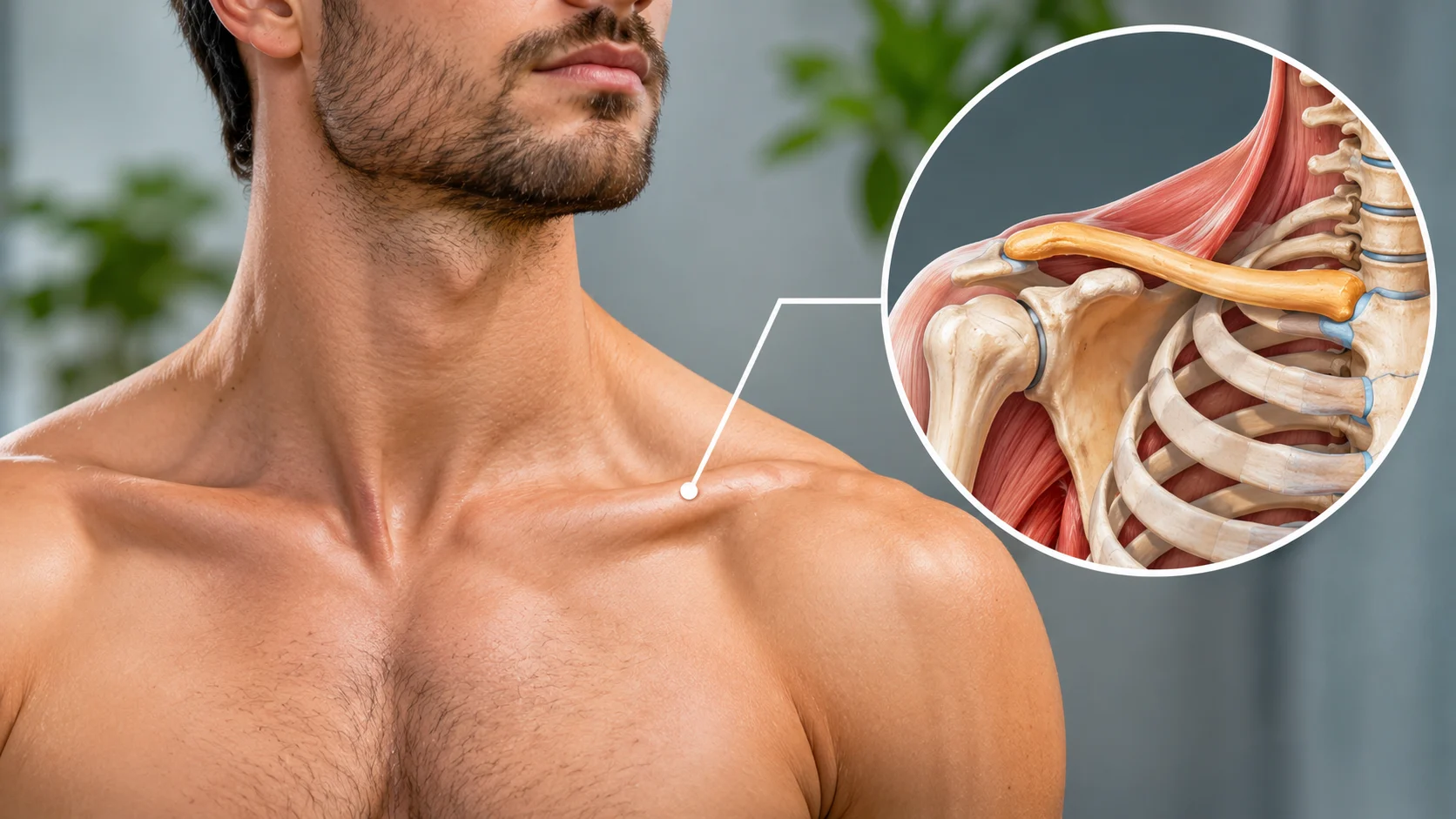
Clavicular is an anatomical term that means relating to the clavicle, commonly known as the collarbone. The clavicle is a long, slightly curved bone located near the top of the chest, connecting the breastbone to the shoulder. It plays an important role in supporting shoulder movement, maintaining upper-body stability, and protecting nearby structures.
Understanding the clavicular meaning is useful when reading medical reports, learning human anatomy, or studying muscles and joints. Healthcare professionals frequently use this term to describe structures, movements, and conditions associated with the collarbone. This guide explains what clavicular means, where the clavicle is located, how it functions, and why it matters for everyday movement.
What Does Clavicular Mean?
The word clavicular means relating to the clavicle or collarbone. It is an adjective commonly used in anatomy, healthcare, and medical descriptions. When a structure is described as clavicular, it generally means that the structure is connected to, located near, or associated with the collarbone.
For example, the clavicular head of a muscle refers to the portion of that muscle that attaches to the clavicle. Similarly, the term clavicular region describes the area surrounding the collarbone. These expressions help medical professionals explain specific body structures accurately without using lengthy descriptions.
Understanding this terminology makes medical information easier to interpret. You might encounter the word in discussions about shoulder anatomy, muscle attachments, physical examinations, or bone injuries. Although it sounds technical, its meaning is straightforward once you understand that the clavicle is simply the anatomical name for the collarbone.
Where Is the Clavicle Located?
The clavicle is located at the upper front of the chest, extending horizontally between the sternum and the shoulder. Most people have two clavicles, one on each side of the body. These bones form part of the shoulder girdle and help connect the upper limbs to the central skeleton.
You can identify the general location of the clavicle by looking at the area between the base of the neck and the outer shoulder. The bone forms a gentle curve beneath the skin. Its position makes it an important anatomical landmark for understanding the relationship between the chest, neck, and shoulders.
The inner end of the clavicle connects to the sternum, while the outer end meets a part of the shoulder blade called the acromion. These connections create important joints that support upper-body movement. Together with muscles and ligaments, the clavicle helps maintain the position of the shoulder during everyday activities.
What Is the Anatomy of the Clavicle?
The clavicle is a long bone with a distinctive S-shaped curve when viewed from above. Unlike many other long bones, much of its length can be felt beneath the skin. Its shape provides structural support while allowing the shoulder complex to move through a wide range of positions.
Anatomically, the clavicle has two ends and a central shaft. The medial, or sternal, end connects toward the breastbone, while the lateral, or acromial, end connects toward the shoulder. The shaft lies between these ends and provides attachment areas for several important muscles and ligaments.
The surfaces of the clavicle contain small anatomical features that support muscle and ligament attachments. These structures help stabilize the shoulder girdle during movement. Understanding the bone’s basic anatomy is useful when studying shoulder injuries, evaluating posture, or learning how different upper-body structures work together.
What Is the Main Function of the Clavicle?
The clavicle helps support the shoulder by maintaining a connection between the arm and the central skeleton. It acts as a structural support that keeps the shoulder positioned away from the chest. This arrangement gives the arm more freedom to move during reaching, lifting, and other everyday actions.
Another important function involves transferring forces between the upper limb and the rest of the body. When you push, pull, or support an object, forces travel through the shoulder complex. The clavicle helps transmit these forces toward the sternum while working with surrounding muscles and ligaments.
The clavicle also contributes to protecting important structures beneath it. Blood vessels and nerves pass through the region between the neck and upper limb. Although the collarbone is not a complete protective shield, its position helps provide structural support around these sensitive anatomical pathways.
What Are the Clavicular Joints?
The clavicle forms two major joints that help connect the shoulder girdle to the rest of the skeleton. These are the sternoclavicular joint and the acromioclavicular joint. Each joint has a different anatomical position and contributes to coordinated movement of the shoulder and upper limb.
The sternoclavicular joint connects the inner end of the clavicle to the upper portion of the sternum. It is the main bony connection between the upper limb and the axial skeleton. This joint permits several small but important movements that support lifting the arm and positioning the shoulder.
The acromioclavicular joint connects the outer end of the clavicle to the acromion of the scapula. It allows adjustments between the collarbone and shoulder blade during arm movement. Ligaments surrounding this joint provide stability, helping the shoulder complex remain coordinated during different physical activities.
What Is the Clavicular Head of a Muscle?
The clavicular head refers to a portion of a muscle that originates from or attaches to the clavicle. In anatomy, the term head often identifies a distinct part of a larger muscle. This description helps distinguish muscle fibers according to their attachment points and functional contributions.
One common example is the clavicular head of the pectoralis major muscle. This portion originates from the medial part of the clavicle and contributes to movements of the upper arm. It works alongside other portions of the chest muscle during pushing, lifting, and bringing the arm across the body.
The sternocleidomastoid muscle also has a clavicular head, which attaches near the inner portion of the collarbone. This muscle contributes to head and neck movements. Understanding these examples shows how the word clavicular identifies anatomical relationships rather than describing a completely separate bone or muscle.
What Is the Clavicular Region?
The clavicular region is the area of the upper chest associated with the collarbone. It includes the bone itself and nearby muscles, ligaments, joints, and soft tissues. Medical professionals use this regional description when discussing anatomy, examining injuries, or identifying the location of symptoms.
This region sits between the lower neck and the upper portion of the chest and shoulder. Several important structures are located nearby, including muscles that assist with shoulder movement. The region also lies close to nerves and blood vessels that travel between the neck and the upper limb.
Understanding the clavicular region can help people describe symptoms more accurately during medical appointments. For example, discomfort near the inner collarbone may involve different structures from pain near the outer shoulder. However, the location of pain alone cannot reliably identify its cause without appropriate examination.
What Muscles Attach to the Clavicle?
Several muscles attach to different parts of the clavicle and help control movement of the shoulder, arm, and neck. These include the pectoralis major, deltoid, trapezius, sternocleidomastoid, and subclavius muscles. Each attachment supports a particular function within the upper-body movement system.
The deltoid muscle attaches to the outer part of the clavicle and contributes to shoulder movement. The trapezius also connects near the lateral clavicle and helps position the shoulder blade. Meanwhile, the pectoralis major has a clavicular portion that contributes to moving the upper arm forward and inward.
The subclavius muscle sits beneath the clavicle and helps stabilize it during certain movements. The sternocleidomastoid connects the collarbone to structures of the head and neck. Together, these muscles demonstrate how the clavicle participates in several connected movement systems rather than functioning as an isolated bone.
Why Is the Clavicle Important for Shoulder Movement?
The clavicle supports shoulder movement by allowing the shoulder blade and arm to change position smoothly. Its joints permit controlled motion as the arm moves upward, forward, or backward. Without these adjustments, the shoulder would have less freedom to perform many ordinary daily activities.
When you raise your arm overhead, the clavicle moves in coordination with the scapula and surrounding muscles. This coordinated process helps maintain appropriate joint positioning throughout the movement. The sternoclavicular and acromioclavicular joints both contribute to these adjustments, even though their movements may appear relatively small.
The clavicle also helps maintain the shoulder’s structural relationship with the chest. This support is important when reaching for objects, carrying everyday items, or performing controlled exercises. Healthy joint movement and coordinated muscle activity allow the shoulder complex to function efficiently during different tasks.
What Is Clavicular Pain?
Clavicular pain refers to discomfort located around the collarbone or associated structures. It may develop after an injury, repetitive movement, muscle strain, or irritation near the joints. The exact cause depends on the location, symptoms, activity history, and other relevant medical factors.
Some people experience discomfort near the inner collarbone, while others notice pain closer to the shoulder. Pain may also appear during certain arm movements or when pressure is applied to the area. However, discomfort that seems to involve the clavicle can sometimes originate from nearby muscles or other structures.
Persistent clavicular pain should not be diagnosed based only on its location. A healthcare professional can examine the region and determine whether imaging or additional assessment is necessary. Sudden severe pain following an injury, especially with visible deformity or difficulty moving the arm, requires prompt medical attention.
What Causes Clavicle Injuries?
Clavicle injuries commonly occur when force is transmitted through the shoulder or directly impacts the collarbone. Falls, sports-related collisions, and accidents are possible causes. Because the bone lies relatively close to the skin, certain types of impacts can affect it more directly than deeper skeletal structures.
A clavicle fracture occurs when the collarbone breaks, often following a fall onto the shoulder or a direct impact. The middle portion is a common fracture location. Symptoms may include pain, swelling, tenderness, and difficulty moving the affected arm, although the exact presentation varies between injuries.
Not every injury in the clavicular region involves a broken bone. Ligament injuries, joint irritation, and surrounding soft-tissue problems can produce similar discomfort. Medical evaluation helps distinguish these possibilities and identify suitable treatment based on the type and severity of the injury.
What Is a Clavicle Fracture?
A clavicle fracture is a break in the collarbone that can affect its shaft or either end. It is a relatively common injury, particularly after falls or direct shoulder impacts. The severity varies depending on whether the bone fragments remain aligned and whether nearby structures are affected.
Typical symptoms include tenderness, swelling, and pain when moving the shoulder or arm. Some fractures may cause visible changes in the contour of the collarbone. A healthcare professional usually evaluates the injury through a physical examination and may request X-rays to confirm the fracture and assess its position.
Treatment depends on the fracture pattern, alignment, and individual circumstances. Many uncomplicated fractures heal with appropriate support and rehabilitation, while certain injuries require surgical assessment. Following professional guidance is important because returning to physical activities too early may interfere with proper healing.
What Is the Acromioclavicular Joint?
The acromioclavicular joint, often called the AC joint, connects the clavicle to the acromion of the shoulder blade. It is located near the outer tip of the shoulder. Although relatively small, this joint helps coordinate movements between the collarbone and scapula during everyday arm activities.
Ligaments surrounding the AC joint provide stability and maintain the relationship between the two bones. The acromioclavicular and coracoclavicular ligaments are particularly important for supporting this area. Together, they help control movement and resist forces that might otherwise cause excessive separation between the joint surfaces.
AC joint injuries can occur after falls or direct impacts to the shoulder. These injuries range from mild ligament sprains to more significant joint separation. Pain near the top of the shoulder, swelling, and tenderness may occur, and medical evaluation can help determine the appropriate treatment.
What Is the Sternoclavicular Joint?
The sternoclavicular joint connects the inner end of the clavicle to the upper sternum and nearby first costal cartilage. It is positioned near the base of the neck. This joint forms an important connection between the upper limb and the central skeleton while permitting movement in several directions.
During shoulder elevation, forward reaching, and other arm movements, the sternoclavicular joint allows the clavicle to adjust its position. Strong ligaments and an internal joint disc contribute to its stability. These structures help manage forces moving between the shoulder girdle and the torso during normal activities.
Injuries to this joint are less common than some other shoulder problems. However, significant trauma can cause painful sprains or dislocations requiring medical assessment. Injuries that push the inner clavicle backward may threaten nearby structures, making urgent medical evaluation especially important when breathing or swallowing difficulties occur.
What Does Clavicular Mean in Medical Reports?
Medical reports use the word clavicular to identify structures or findings associated with the collarbone. The term may appear in imaging results, physical examination notes, or descriptions of muscular attachments. Understanding this language can make healthcare documents easier to read without requiring extensive anatomical training.
For example, a report mentioning the clavicular region refers to the area around the collarbone. The phrase distal clavicular may describe the outer end of the bone near the shoulder. Meanwhile, medial clavicular refers to the inner portion, closer to the sternum and center of the chest.
These descriptions help healthcare professionals communicate precise anatomical locations. However, the presence of the word clavicular does not automatically indicate an injury or disease. Its meaning depends on the complete sentence, examination findings, and clinical context in which it appears.
What Is the Difference Between Clavicular and Clavicle?
Clavicle is the anatomical noun used to identify the collarbone itself. Clavicular is the adjective used to describe something related to that bone. Although the words are closely connected, they serve different purposes when used in anatomical descriptions or medical communication.
For example, a doctor might explain that the clavicle connects the sternum to the shoulder blade. The same doctor may use clavicular to describe a ligament attachment, muscle portion, or anatomical region. The first word names the structure, while the second describes a relationship involving that structure.
Understanding the distinction makes medical terminology more approachable. Similar patterns appear throughout anatomy, where a body structure has a noun and a related descriptive adjective. Recognizing these relationships helps students and patients interpret technical language more confidently without memorizing complicated definitions.
How Is the Clavicle Different From the Scapula?
The clavicle and scapula are separate bones that work together as part of the shoulder girdle. The clavicle is the curved collarbone located across the upper front of the chest. The scapula, commonly called the shoulder blade, is a broad, triangular bone positioned on the upper back.
The clavicle connects the shoulder region to the sternum and helps maintain its position. The scapula provides attachment areas for multiple muscles and contributes to the shoulder socket. These different structures cooperate to support the arm and allow a wide range of upper-body movements.
Although their shapes and positions differ, both bones are essential for shoulder function. Movement of the scapula is coordinated with the clavicle through their connecting joints and supporting tissues. Understanding their relationship helps explain why shoulder movement involves more than the upper arm bone alone.
How to Support Healthy Clavicle and Shoulder Function
Maintaining healthy shoulder movement involves paying attention to comfortable activity, posture, and muscle coordination. The clavicle depends on surrounding muscles and joints for stable movement. Regular everyday activities that encourage comfortable shoulder mobility can support normal function without requiring complicated exercise routines.
Strengthening exercises may help improve the function of muscles surrounding the shoulder girdle. Activities that train the upper back, chest, and shoulder muscles can support coordinated movement when performed appropriately. However, exercise choices should match individual abilities, and movements that cause significant pain should not be forced.
People recovering from clavicle injuries may require specific rehabilitation instructions. A physical therapist or other qualified healthcare professional can recommend suitable activities based on healing progress and medical findings. Following individualized guidance is particularly important after fractures, dislocations, or significant shoulder injuries.
Common Misunderstandings About the Clavicle
One common misunderstanding is that the clavicle is simply a decorative or minor bone near the neck. In reality, it provides important structural support for the shoulder girdle. Its connections help transfer forces, maintain shoulder positioning, and coordinate movements involving the arm and upper body.
Another misconception is that every pain near the collarbone indicates a fracture. Several structures surround the clavicle, including muscles, ligaments, and joints. Discomfort may arise from different causes, so symptoms and medical examination are necessary to determine whether the bone itself is involved.
Some people also assume that the clavicle remains completely still during arm movements. However, it changes position as the shoulder complex moves. These coordinated adjustments contribute to comfortable reaching, lifting, and other activities that depend on the combined movement of multiple upper-body structures.
Why Understanding Clavicular Anatomy Matters
Learning clavicular anatomy helps explain the relationship between the shoulder, chest, and neck. The collarbone connects important skeletal structures and provides attachment points for several muscles. Understanding these connections makes it easier to recognize how different body parts cooperate during everyday movement.
This knowledge is also useful when reading medical information or discussing symptoms with healthcare professionals. Terms such as clavicular head, medial clavicle, and acromioclavicular joint become easier to understand once their anatomical relationships are clear. Familiarity with basic terminology can support more effective communication during health-related discussions.
Students studying biology, anatomy, physiotherapy, or sports science can also benefit from understanding the clavicle. Its structure illustrates how bones, joints, ligaments, and muscles work together. Recognizing these relationships provides a useful foundation for learning more advanced topics involving shoulder mechanics and musculoskeletal health.
Conclusion
The clavicular meaning is simple: it refers to anything related to the clavicle, commonly known as the collarbone. This important bone connects the sternum to the shoulder blade and helps support upper-body movement. Its position and anatomical connections make it an essential part of the shoulder girdle.
The clavicle contributes to shoulder stability, transfers forces between the arm and torso, and provides attachment points for several muscles. It also forms the sternoclavicular and acromioclavicular joints, which support coordinated movement. Understanding these structures makes anatomical descriptions and medical terminology easier to interpret.
Learning about clavicular anatomy can help students, patients, and anyone interested in the human body understand shoulder function more clearly. Although most everyday movements involve the clavicle naturally, injuries or persistent discomfort may require professional assessment. Knowing the basic terminology provides a helpful starting point for understanding this important bone.
Frequently Asked Questions (FAQs)
What Does Clavicular Mean in Simple Words?
Clavicular means relating to the clavicle, or collarbone. The term is commonly used in anatomy and medicine to describe muscles, joints, ligaments, regions, or other structures associated with this bone.
Where Is the Clavicular Area Located?
The clavicular area is located at the upper front of the chest, between the base of the neck and the shoulder. It includes the collarbone and nearby anatomical structures.
What Is the Main Function of the Clavicle?
The clavicle helps support the shoulder, maintain its position, and transfer forces between the upper limb and torso. It also provides important attachment points for muscles and ligaments.
What Is the Clavicular Head of the Chest Muscle?
The clavicular head is the upper portion of the pectoralis major muscle that originates from the clavicle. It contributes to shoulder movements, including bringing the arm forward and inward.
Is the Clavicle the Same as the Collarbone?
Yes, the clavicle and collarbone are the same bone. Clavicle is the medical and anatomical term, while collarbone is the common name used in everyday conversations.