

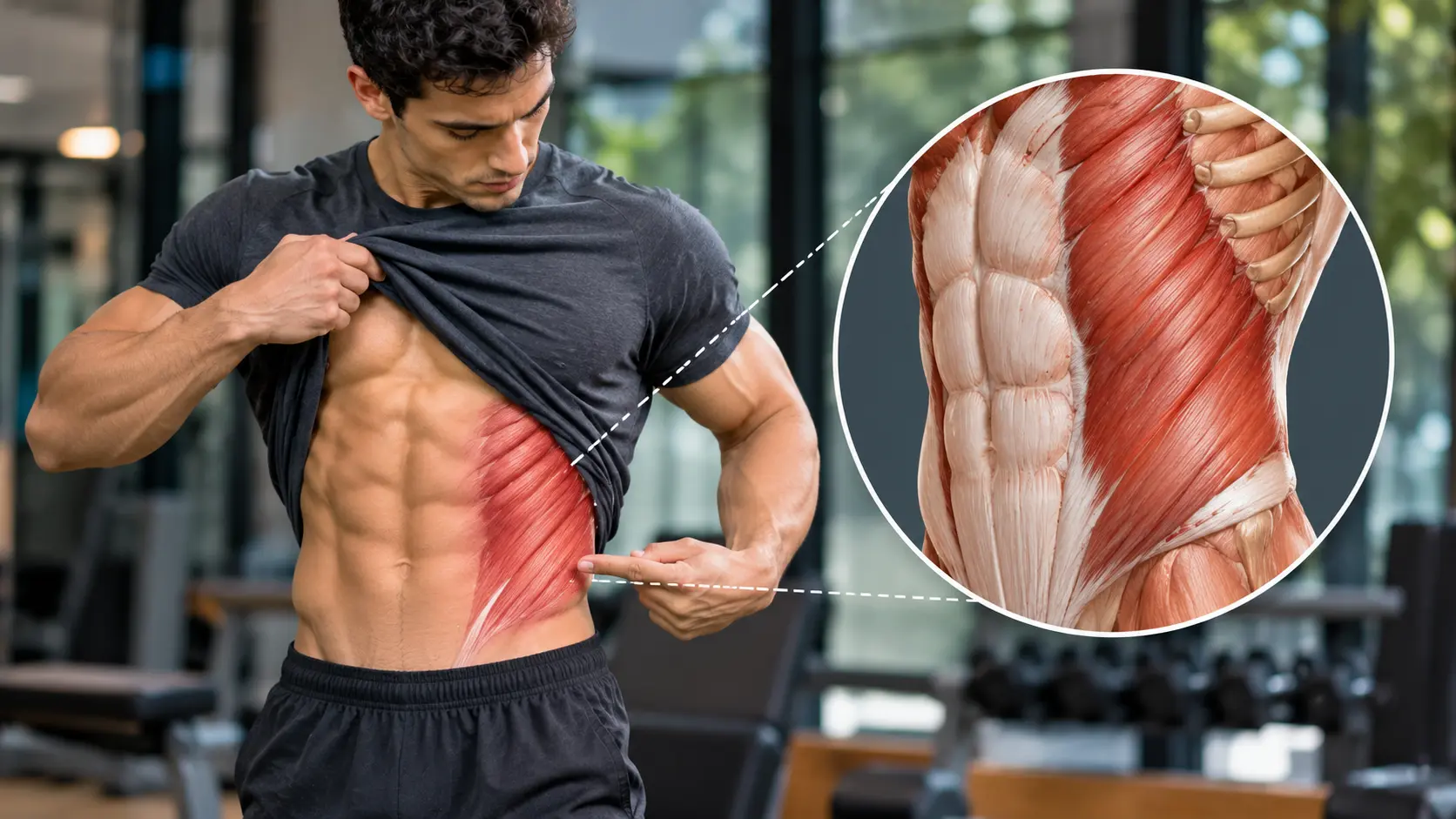
Have you ever felt an unfamiliar pulling sensation along the side of your abdomen while reaching for something or turning around? You might wonder whether it comes from your ribs, stomach, or another part of your body. Understanding which muscles occupy this area can help you describe the sensation more clearly.
If you’ve ever searched for where is your oblique muscle, you’re probably trying to understand how the muscles along your sides work. These muscles play an important role in everyday movements, from turning your upper body to maintaining balance. However, many people are unfamiliar with their exact location and purpose.
The confusion often increases when you discover that there are internal and external oblique muscles. Both occupy similar areas, but they sit at different depths and contribute to movement in different ways. Understanding their relationship makes abdominal anatomy much easier to learn.
This guide explains where the oblique muscles are located, how they work, and why they matter in everyday life. You’ll also learn how they interact with surrounding muscles and when abdominal discomfort may require medical attention. You don’t need a medical background to understand these important parts of your body.
Where Is Your Oblique Muscle Located?
Finding the oblique muscles can be confusing because they cover a relatively broad area rather than a single small spot. They extend across the sides and front-side portions of the abdomen. Their location is generally between the lower ribs and the upper part of the pelvis.
You have oblique muscles on both the left and right sides of your body. Each side contains an external oblique and an internal oblique, arranged in overlapping layers. Together, they form part of the muscular abdominal wall surrounding your abdominal cavity.
Imagine the area between your lower ribs and the upper edge of your hip bone. Much of this side abdominal region contains layers of oblique muscle tissue. These layers also extend toward the front of your abdomen through broad sheets of connective tissue.
Unlike muscles located directly along the center of your abdomen, the obliques occupy more of its outer regions. Their position allows them to contribute to twisting, bending, and supporting your upper body. Understanding this location provides a useful starting point for learning about your core muscles.
What Are the Oblique Muscles?
Many people associate abdominal muscles exclusively with the muscles running down the front of the stomach. However, the abdominal wall contains several muscle groups that perform different but connected functions. The obliques are among the most important muscles positioned along its sides.
The oblique muscles are flat skeletal muscles that help support and move the trunk. Their name comes from the angled direction in which many of their muscle fibers run. These diagonal fibers contribute to movements involving rotation and sideways bending.
There are two main types of oblique muscles:
- External oblique muscles: The outer muscular layer along each side of the abdomen.
- Internal oblique muscles: A deeper muscular layer located underneath the external obliques.
Both muscle groups contribute to coordinated movement rather than working independently all the time. They interact with surrounding muscles whenever you turn, reach, carry objects, or adjust your posture. Their combined activity helps your body respond to changing movement demands.
Understanding Oblique Muscle Anatomy
Medical descriptions of muscle anatomy can feel overwhelming when they introduce unfamiliar terms and complicated diagrams. However, understanding the basic arrangement of the oblique muscles does not require memorizing every anatomical detail. Starting with their layers, attachments, and fiber directions makes the subject more approachable.
The external oblique occupies the outermost muscular layer of the lateral abdominal wall. Beneath it lies the internal oblique, followed by a deeper muscle called the transversus abdominis. These overlapping layers contribute to abdominal support and coordinated movement.
Each oblique muscle contains fibers that connect to bones or sheets of connective tissue. These attachments allow muscle contractions to produce movement and tension across the abdominal wall. The direction of the fibers influences how each muscle contributes to different activities.
An easy way to understand this arrangement is to imagine several overlapping layers of supportive fabric. Each layer has a different orientation, but they work together as part of a larger structure. The abdominal wall uses a similar arrangement to accommodate movement while supporting internal structures.
Where Is the External Oblique Muscle Located?
If you’ve heard someone mention the external oblique, you might wonder whether it refers to a completely separate muscle group. In reality, it is one of the two oblique muscle layers on each side of your abdomen. Its outer position makes it more superficial than the internal oblique.
The external oblique muscle extends from the lower eight ribs toward the pelvis and the front of the abdominal wall. Many of its fibers travel downward and inward toward the body’s midline. This arrangement allows it to contribute to several movements involving the trunk.
The muscle also connects to broad connective tissue that extends across the front of the abdomen. These attachments help distribute tension throughout the abdominal wall during movement. The external oblique therefore contributes to more than movements involving the sides of your body.
External Oblique Muscle Origin and Insertion
Anatomy textbooks often use the terms origin and insertion when describing muscle attachments. These terms can initially sound complicated, but they simply identify where a muscle attaches to different structures. Understanding these attachment points helps explain the movements a muscle can produce.
The external oblique originates along the outer surfaces of ribs five through twelve. Its attachments extend toward the iliac crest, pubic region, and a central connective tissue structure called the linea alba. A broad tendon-like sheet helps connect much of the muscle to these areas.
The main anatomical details include:
- Origin: Outer surfaces of ribs five through twelve.
- Insertion: Iliac crest, pubic tubercle, and linea alba through connective tissue.
- Fiber direction: Mainly downward and toward the body’s midline.
- Position: Outermost muscle layer of the lateral abdominal wall.
These attachment points allow the external oblique to influence the relationship between the rib cage and pelvis. When the muscle contracts, it can contribute to movement or help maintain stability. Its exact role depends on what the surrounding muscles are doing.
Where Is the Internal Oblique Muscle Located?
The internal oblique can be harder to understand because it sits underneath another muscle layer. You cannot reliably distinguish it from the external oblique simply by touching the side of your abdomen. Its deeper position is an important part of its anatomical identity.
The internal oblique lies between the external oblique and the transversus abdominis. It extends across the side of the abdomen and connects with structures around the lower ribs, pelvis, and abdominal midline. Its broad shape allows it to participate in several forms of trunk movement.
Many internal oblique fibers travel upward and inward, although their orientation varies across different regions. This arrangement differs from the general direction of the external oblique fibers. The overlapping pattern helps the muscles perform complementary movements.
Internal Oblique Muscle Origin and Insertion
Understanding internal oblique attachments becomes easier when you consider its relationship with the pelvis and rib cage. The muscle connects several structures that move relative to one another during everyday activities. These connections help it contribute to movement and abdominal support.
The internal oblique originates from areas including the iliac crest, thoracolumbar fascia, and inguinal ligament. It attaches toward the lower ribs and central abdominal connective tissue, with some fibers extending toward the pubic region. These connections give it several roles within the abdominal wall.
Its main anatomical features include:
- Origin: Iliac crest, thoracolumbar fascia, and part of the inguinal ligament.
- Insertion: Lower ribs, linea alba, and connective tissue near the pubic region.
- Fiber direction: Generally upward and inward, with regional variation.
- Position: Beneath the external oblique muscle.
The thoracolumbar fascia is a connective tissue structure associated with the lower back. Its connection with the internal oblique illustrates how the abdominal wall relates to surrounding trunk structures. This relationship becomes important during coordinated movement and stabilization.
External Oblique vs. Internal Oblique: What Is the Difference?
It is easy to confuse the internal and external obliques because they occupy similar areas and share several functions. However, their positions and fiber directions are different. These differences help them work together when your body performs particular movements.
One major distinction involves trunk rotation. An external oblique generally contributes to rotation toward the opposite side, while an internal oblique contributes to rotation toward the same side. During coordinated movement, muscles from opposite sides of the body can work together.
| Feature | External Oblique | Internal Oblique |
|---|---|---|
| Location | Outer abdominal muscle layer | Beneath the external oblique |
| Fiber direction | Mainly downward and inward | Mainly upward and inward |
| Trunk rotation | Opposite-side rotation | Same-side rotation |
| Side bending | Assists lateral movement | Assists lateral movement |
| Abdominal compression | Contributes to compression | Contributes to compression |
| Core support | Supports trunk stability | Supports trunk stability |
| Anatomical depth | More superficial | Deeper |
For example, turning your trunk toward the right can involve cooperation between the left external oblique and right internal oblique. Other trunk muscles also contribute to controlling that movement. The result is coordinated activity rather than an isolated contraction of one muscle.
What Do the Oblique Muscles Do?
Knowing where a muscle is located is helpful, but understanding its purpose makes the information more meaningful. The obliques contribute to many ordinary movements that you might perform without thinking about them. Their functions extend beyond activities commonly associated with abdominal muscles.
The obliques help manage movement between your rib cage, spine, and pelvis. They can contribute to generating movement or controlling unwanted movement, depending on the activity. This combination makes them important components of the trunk’s muscular system.
Trunk Rotation
Turning to look at something beside you involves coordination between several parts of your body. When your trunk rotates, the oblique muscles contribute to producing and controlling that motion. Their angled fibers make them particularly suited to rotational activity.
The internal and external obliques cooperate with other muscles during turning movements. Their activity depends on factors such as movement direction and body position. This coordination allows your upper body to move while maintaining appropriate support.
Sideways Bending
Reaching toward something beside you may involve bending your trunk sideways. This movement is called lateral flexion and requires several muscles to work together. The obliques contribute to controlling the motion in combination with surrounding structures.
Muscles on different sides can have different roles during sideways bending. Some contribute to producing the movement, while others help control its speed and range. This cooperation supports smooth and coordinated everyday activity.
Core Stability
Maintaining a steady body position can become more challenging when you carry an object or change direction. Your trunk muscles respond by helping manage the forces acting on your body. The obliques form an important part of this stabilizing system.
Core stability does not mean keeping your body completely rigid. It involves coordinating muscle activity to support movement while controlling unnecessary motion. The obliques contribute alongside deeper abdominal muscles, back muscles, and other supporting structures.
Abdominal Compression
The abdominal wall needs to accommodate changes in pressure during several natural bodily functions. Its layered muscular structure helps manage these changing demands. The obliques contribute by generating tension across the abdominal wall.
This muscle activity plays a role during coughing, sneezing, and other actions involving increased abdominal pressure. It occurs alongside contributions from additional muscles and structures. The process demonstrates that abdominal muscles have functions beyond voluntary body movements.
Supporting Forceful Breathing
Breathing might not seem closely related to muscles located around your abdomen. However, abdominal muscles contribute when your body needs to breathe out more forcefully. The obliques participate in this process by helping compress the abdominal contents.
During quiet breathing, exhalation is usually largely passive. More forceful expiration can involve increased activity from the abdominal muscles. This distinction explains why coughing may noticeably engage muscles around your sides.
How the Obliques Work With Other Core Muscles
People sometimes imagine that individual abdominal muscles operate separately whenever the body moves. However, everyday movement involves cooperation between multiple muscles rather than isolated activity. The obliques are one part of a larger muscular system.
The rectus abdominis, transversus abdominis, and muscles surrounding the spine all contribute to trunk function. The diaphragm and pelvic floor also participate in managing pressure and support within the trunk. Their activity changes according to breathing, posture, and movement requirements.
Understanding these relationships helps explain why discomfort in one area can be difficult to identify. Several structures occupy nearby regions and may contribute to similar movements. Location alone is therefore not enough to determine which muscle or tissue is responsible for a symptom.
| Muscle Group | General Location | Main Contribution |
|---|---|---|
| External oblique | Outer sides of the abdomen | Rotation and abdominal support |
| Internal oblique | Beneath external oblique | Rotation and trunk control |
| Rectus abdominis | Front of the abdomen | Forward trunk bending |
| Transversus abdominis | Deep abdominal wall | Abdominal compression and support |
| Quadratus lumborum | Deep posterior abdominal region | Side bending and lower trunk stability |
| Diaphragm | Beneath the lungs | Breathing and pressure coordination |
These muscles are not interchangeable, even though some of their responsibilities overlap. Each contributes according to its anatomical position and connections. Together, they help the body manage a wide variety of movement demands.
How Are Oblique Muscles Used in Everyday Life?
You might think abdominal muscles only become important during sports or structured physical activity. In reality, they contribute to ordinary tasks throughout the day. Many of these actions require your trunk to remain supported while other body parts move.
Common everyday activities involving the obliques include:
- Turning to speak to someone beside you.
- Reaching for an object on a nearby shelf.
- Changing direction while walking.
- Carrying groceries or other everyday items.
- Getting up from a chair.
- Adjusting your position while sitting.
- Coughing or sneezing.
Imagine carrying a shopping bag in one hand while walking. Your body needs to manage the uneven distribution of weight as you move. Several muscles, including the obliques, contribute to maintaining control throughout the activity.
Their involvement may be subtle rather than something you consciously notice. Healthy movement generally depends on automatic coordination between many muscles. Learning about this process can improve your understanding of how your body functions.
Where Is Oblique Muscle Pain Usually Felt?
Experiencing discomfort along the side of your abdomen can create uncertainty about which part of your body is affected. Because several muscles and internal organs occupy nearby areas, identifying the cause can be challenging. Pain in the oblique region does not automatically indicate an oblique muscle injury.
Muscle-related discomfort may occur anywhere along the affected abdominal wall, including near the lower ribs or the upper pelvis. Its location and intensity can vary depending on the underlying problem. Some people notice discomfort during movements involving the trunk.
Possible symptoms of an abdominal muscle strain include:
- Localized muscle tenderness.
- Discomfort during twisting or bending.
- Pain when coughing or sneezing.
- Muscle stiffness or spasms.
- Swelling around the affected area.
These symptoms are not exclusive to muscle strains and cannot confirm a diagnosis. Digestive conditions, hernias, kidney problems, and other health concerns can produce discomfort in overlapping regions. A healthcare professional can assess the symptoms and determine whether further investigation is necessary.
What Causes Oblique Muscle Discomfort?
Side abdominal discomfort can be frustrating, particularly when you cannot identify what triggered it. Sometimes, symptoms develop after an unfamiliar movement, while other times they appear without an obvious explanation. Understanding possible causes can help you communicate more effectively with a healthcare professional.
Muscle Strain
An abdominal muscle strain occurs when muscle tissue is stretched beyond its tolerance. Sudden movements, physical activities, and repetitive demands can contribute to this type of injury. The severity of a strain can vary considerably between individuals.
A healthcare professional may assess how the symptoms began and which movements affect them. This information can help distinguish a possible muscle injury from other causes of abdominal pain. Avoid repeatedly provoking painful movements while the cause remains uncertain.
Repetitive Physical Activities
Repeated movements can sometimes place more demand on muscles than they are prepared to manage. This may occur during work, recreational activities, or sports involving repeated trunk movement. Discomfort can develop gradually rather than following one specific event.
Taking appropriate breaks and adjusting demanding activities may help manage unnecessary physical strain. Persistent symptoms deserve professional assessment rather than an assumption that they will disappear independently. A suitable recovery approach depends on the actual cause of discomfort.
Frequent Coughing
Persistent coughing can place repeated demands on the muscles of the abdominal wall. Because the obliques participate in forceful expiration, they may become uncomfortable after frequent coughing. However, discomfort associated with coughing can also have other causes.
It is important to consider the underlying reason for a persistent cough rather than focusing only on muscle symptoms. A healthcare professional can assess whether further investigation or treatment is needed. Seek urgent medical help if breathing difficulties or chest pain develop.
Other Abdominal Conditions
Not every uncomfortable sensation around the side of your abdomen originates from a muscle. The abdominal region contains digestive organs and other structures that can produce similar symptoms. This overlap makes self-diagnosis based on pain location unreliable.
Symptoms such as fever, vomiting, urinary changes, or significant abdominal swelling may indicate a problem requiring medical assessment. Even discomfort that changes during movement does not necessarily confirm a muscular cause. Professional evaluation is particularly important when symptoms are unfamiliar, persistent, or worsening.
Oblique Muscle Pain vs. Other Abdominal Pain
Distinguishing muscular discomfort from other forms of abdominal pain can be difficult without medical training. Some symptoms overlap even when their causes are completely different. Understanding these differences can help you describe what you’re experiencing without attempting to diagnose yourself.
| Feature | Possible Muscle-Related Discomfort | Other Abdominal Conditions |
|---|---|---|
| Location | May affect a specific muscle region | May be localized or widespread |
| Movement | May change during trunk movement | Can also change with movement |
| Tenderness | May occur near affected tissue | Can occur with various conditions |
| Additional symptoms | Possible stiffness or muscle spasms | May include fever, nausea, or urinary changes |
| Assessment | Clinical history and examination | May require examination or additional tests |
These differences are general possibilities rather than reliable diagnostic rules. A person can experience muscle discomfort and another abdominal condition at the same time. Accurate assessment depends on the complete pattern of symptoms and relevant medical history.
If you experience unexplained abdominal discomfort, make a note of when it began and whether it changes during ordinary activities. Also record any additional symptoms that occur alongside the discomfort. Sharing these details can help a healthcare professional understand the situation.
Can You Feel Your Oblique Muscles?
Many people want to identify their oblique muscles without using an anatomical diagram. Although the general location is relatively easy to understand, distinguishing individual muscle layers is more difficult. Several tissues occupy the area between the ribs and pelvis.
The external oblique lies closer to the body’s surface than the internal oblique. Nevertheless, skin, connective tissue, and overlapping structures make precise identification through touch unreliable. You cannot independently confirm which muscle is active or injured simply by pressing the area.
A labeled anatomical illustration offers a clearer way to understand the location of each muscle. Look for the relationship between the lower ribs, iliac crest, and abdominal midline. Comparing diagrams of superficial and deeper muscle layers can make the arrangement easier to visualize.
Healthcare professionals may use physical examination and, when appropriate, imaging to assess abdominal wall structures. These methods provide information that casual observation cannot reliably establish. Avoid applying pressure to painful areas in an attempt to identify a particular muscle.
How to Support Healthy Oblique Muscle Function
Maintaining healthy abdominal muscle function does not require complicated routines or focusing exclusively on one muscle group. The body benefits from varied, comfortable movement and appropriate recovery. Supporting general well-being is more useful than concentrating on individual muscles alone.
Regular everyday movement provides opportunities for different muscle groups to coordinate naturally. Appropriate rest, adequate nutrition, and comfortable working positions also support normal physical function. Activity should match your individual circumstances, abilities, and health needs.
Helpful habits include:
- Taking comfortable movement breaks during prolonged sitting.
- Avoiding sudden increases in demanding physical activities.
- Allowing sufficient rest and recovery.
- Eating regular, balanced meals.
- Staying adequately hydrated.
- Seeking professional guidance for recurring discomfort.
If you are recovering from an abdominal injury, an individualized rehabilitation plan may be appropriate. A physiotherapist or other qualified healthcare professional can recommend activities suited to your condition. Avoid starting unfamiliar exercises or stretches when you have unexplained abdominal pain.
Common Misconceptions About Oblique Muscles
Conflicting information about abdominal anatomy can make it difficult to separate facts from assumptions. Some explanations focus entirely on appearance, while others oversimplify how individual muscles work. Understanding common misconceptions helps build a more accurate picture.
Obliques Are Separate From the Abdominal Muscles
Some people describe the obliques as though they belong to an entirely different muscle group. However, they are important components of the abdominal wall. Their position along the sides distinguishes them from the rectus abdominis, not from the abdominal muscular system itself.
Everyone Has Only Two Oblique Muscles
The terms internal and external oblique may suggest that there are only two individual muscles. In reality, both types occur on the left and right sides of the body. This means there are four oblique muscles altogether.
Obliques Only Work During Twisting Movements
Twisting is one of the best-known functions of the oblique muscles. However, they also participate in abdominal compression, sideways bending, and trunk support. Their responsibilities change depending on the activity and the contribution of surrounding muscles.
All Side Abdominal Pain Comes From the Obliques
The location of discomfort can sometimes lead people to assume they have an oblique muscle problem. However, several internal organs and other tissues occupy nearby regions. Identifying the cause requires considering more than the location of pain.
The Internal and External Obliques Work Independently
Although these muscles have distinct anatomical features, they frequently work together. Their different fiber directions allow them to contribute complementary actions during movement. Coordination between multiple muscle groups is a fundamental part of normal trunk function.
When Should You See a Healthcare Professional?
Unfamiliar abdominal discomfort can be difficult to interpret, especially when you suspect a muscle problem. Although some causes are minor, others require prompt medical attention. Knowing when to seek help is more important than identifying a specific muscle yourself.
Arrange a medical assessment if abdominal discomfort persists, repeatedly returns, interferes with daily activities, or becomes progressively worse. A healthcare professional can evaluate your symptoms and determine whether the abdominal muscles are involved. Early assessment may also help identify unrelated conditions.
Seek urgent medical attention if abdominal pain occurs alongside warning signs such as:
- Sudden or severe abdominal pain.
- Difficulty breathing or chest pain.
- Fainting or significant dizziness.
- A rigid or unusually swollen abdomen.
- Blood in vomit or stool.
- Significant pain following an injury.
These warning signs may indicate conditions that require immediate evaluation. Do not delay seeking help because you believe the discomfort is simply related to an abdominal muscle. If you are unsure about the seriousness of your symptoms, contact a healthcare professional for guidance.
Why Understanding Oblique Muscle Anatomy Matters
Learning about abdominal anatomy may seem unnecessary until you encounter an unfamiliar sensation or need to describe a movement. Understanding basic muscle locations can make health information easier to interpret. It also helps you communicate more clearly during medical or physiotherapy appointments.
Knowing the difference between the internal and external obliques provides insight into how the abdominal wall is organized. Their overlapping arrangement demonstrates how the body combines support with flexibility. It also highlights why coordinated movement depends on several muscles rather than one isolated structure.
You do not need to memorize every attachment point to benefit from this knowledge. Start by recognizing the general location, anatomical layers, and basic functions of the obliques. These concepts provide a useful foundation for learning more about human movement.
Frequently Asked Questions
Where exactly are your oblique muscles located?
The oblique muscles are located along both sides of your abdomen, between the lower ribs and pelvis. They also extend toward the front abdominal wall. Each side contains an internal and external oblique muscle.
What is the difference between internal and external obliques?
The external oblique forms the outer muscular layer, while the internal oblique lies beneath it. Their fibers generally follow different directions. Both contribute to trunk rotation, sideways bending, and abdominal support.
How many oblique muscles are in the human body?
The human body has four oblique muscles in total. There are two external obliques and two internal obliques, with one of each type on either side. They work together during various everyday movements.
What does a strained oblique muscle feel like?
An abdominal muscle strain may cause localized tenderness, stiffness, or discomfort during twisting and coughing. However, these symptoms can overlap with other health conditions. Persistent or unexplained pain should be assessed by a healthcare professional.
Are the oblique muscles part of your core?
Yes, the oblique muscles are important components of the core muscular system. They cooperate with other abdominal and back muscles to support movement and stability. They also contribute to managing abdominal pressure.
Conclusion
Understanding where your oblique muscles are located makes it easier to appreciate how your abdominal wall functions. The internal and external obliques extend along both sides of your abdomen and contribute to rotation, bending, breathing, and trunk support. Their overlapping arrangement allows them to cooperate with surrounding muscles during everyday activities.
Although discomfort around the oblique region can sometimes originate from muscle tissue, other conditions may produce similar symptoms. Understanding anatomy is useful, but it cannot replace an appropriate medical assessment. Maintaining comfortable movement, sufficient recovery, and general well-being helps support normal muscle function.
Start by reviewing a labeled anatomical illustration that shows both the internal and external oblique muscles. Identify their positions relative to the lower ribs, pelvis, and other abdominal muscles. Understanding how your body works is a valuable first step toward making informed decisions about your health.