

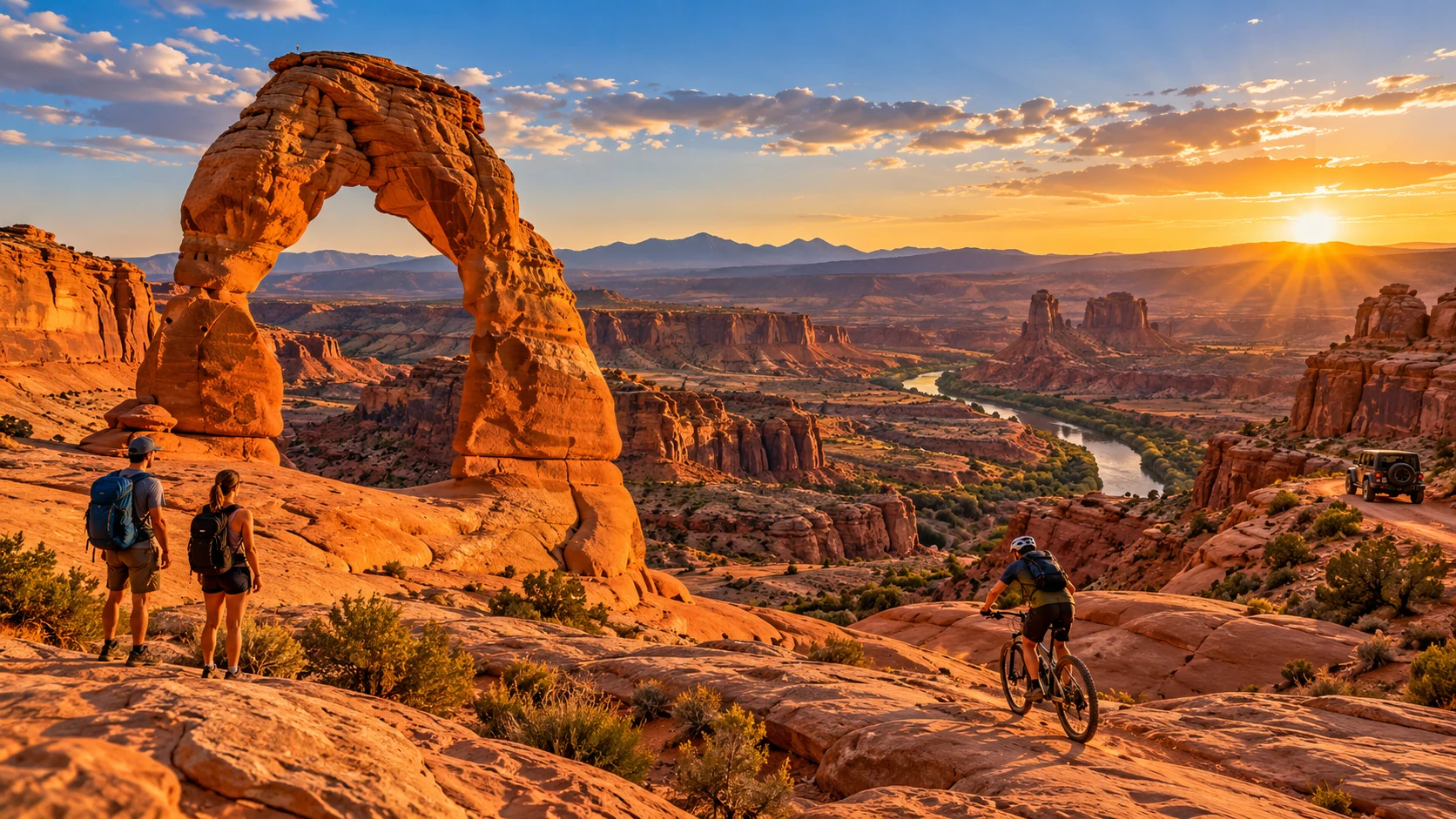
Moab is one of the most spectacular travel destinations in Utah, known for its dramatic red rock formations, breathtaking canyon landscapes, and unforgettable desert scenery. Surrounded by famous national parks and natural attractions, this small town offers an incredible setting for sightseeing, photography, and outdoor exploration. Whether you love nature or want to discover beautiful landscapes, Moab provides plenty of memorable experiences.
This Moab travel guide explores the best things to do and see, including Arches National Park, Canyonlands National Park, Dead Horse Point State Park, and the Colorado River. Visitors can discover stunning viewpoints, scenic driving routes, unusual rock formations, and fascinating geological features. The area’s combination of natural beauty and accessible attractions makes it a popular destination for travelers exploring the American Southwest.
Planning a trip to Moab involves choosing the right season, understanding transportation options, and selecting attractions that match your interests. Some locations offer easy roadside viewpoints, while others require longer walks or guided excursions. This guide covers Moab’s top attractions, best visiting seasons, accommodation options, and practical tips for enjoying Utah’s remarkable red rock country.
1. Explore Arches National Park
Arches National Park is one of the most famous attractions near Moab, celebrated for its extraordinary collection of natural sandstone arches. The park contains more than 2,000 documented arches, along with towering rock fins, balanced formations, and dramatic desert landscapes. Its distinctive scenery makes it an essential destination for photographers, nature enthusiasts, and first-time visitors.
One of the park’s most recognizable features is Delicate Arch, a freestanding sandstone formation that has become a symbol of Utah. Visitors can also admire Landscape Arch, Double Arch, and the unusual Balanced Rock formation. Several scenic viewpoints and shorter walking routes provide opportunities to appreciate the landscape without completing demanding hikes.
Arches National Park can become crowded during popular travel periods, particularly spring and autumn. Starting early in the day may help visitors experience cooler temperatures and more convenient parking conditions. In 2026, advance timed-entry reservations are not required, although entrance fees, designated campground reservations, and certain activity permits still apply.
2. Visit Delicate Arch for Iconic Desert Views
Delicate Arch is among the most photographed natural landmarks in the American Southwest. Its distinctive curved shape stands against a background of open desert terrain and distant mountains. The formation attracts visitors who want to experience one of Utah’s most recognizable geological features and appreciate the extraordinary landscape surrounding it.
Travelers can view Delicate Arch from designated viewpoints or follow the established trail leading closer to the formation. The main hiking route is moderately challenging, with exposed sandstone and limited shade. Visitors who prefer a shorter experience can explore the designated lower viewpoint, although the arch appears much smaller from that distance.
Planning around weather conditions is important because the surrounding desert can become extremely hot during warmer months. Carry sufficient drinking water, follow marked routes, and avoid approaching exposed edges. Early morning and late afternoon often provide attractive lighting for photography, but visitors should allow enough daylight to return safely.
3. Discover Canyonlands National Park
Canyonlands National Park offers some of the most dramatic scenery in Utah, featuring enormous canyons, layered rock formations, and expansive desert viewpoints. The park is divided into several districts separated by the Colorado and Green rivers. Its vast landscapes provide a quieter and more remote atmosphere than some of the area’s other famous attractions.
Island in the Sky is the most accessible district for many visitors staying in Moab. The elevated mesa offers breathtaking views across deep canyons and distant rock formations. Popular attractions include Grand View Point, Green River Overlook, and Mesa Arch, each offering a different perspective on the park’s extraordinary geography.
Other districts, including The Needles, offer additional scenery but require considerably more travel time from Moab. Visitors should not assume that the park’s districts are connected by direct internal roads. Checking transportation routes, weather conditions, and available facilities before departure helps ensure a more comfortable and manageable sightseeing experience.
4. Enjoy the Views at Dead Horse Point State Park
Dead Horse Point State Park is one of the most beautiful scenic destinations near Moab. It is famous for its impressive overlooks above the Colorado River and surrounding canyon country. The landscape features dramatic cliffs, layered sandstone formations, and sweeping views that make the park especially attractive to photographers.
The main overlook provides a spectacular view of the Colorado River winding through the canyon below. Visitors can enjoy designated observation areas and discover different perspectives along established walking routes. The park’s scenery is particularly striking when changing sunlight highlights the contrast between reddish rock layers and the surrounding desert.
Dead Horse Point State Park is a convenient addition to a day exploring the Island in the Sky area. Visitors should check current admission requirements, which are separate from national park entrance fees. Cool morning conditions and late afternoon light often make sightseeing more comfortable and visually rewarding.
5. Experience the Colorado River Scenic Byway
The Colorado River Scenic Byway, commonly associated with Utah State Route 128, is among the most attractive driving routes around Moab. The road follows sections of the Colorado River beneath towering sandstone cliffs. Its combination of water, desert vegetation, and red rock scenery creates an unforgettable landscape.
Along the route, travelers can appreciate impressive canyon walls, riverside scenery, and designated stopping points. The changing formations provide numerous opportunities to observe the region’s natural geology. Several areas also feature historic and cultural connections that make the drive more interesting than simply traveling between destinations.
This scenic road is particularly enjoyable for travelers who prefer exploring natural landscapes by vehicle. Driving at a comfortable pace allows time to appreciate the surroundings without rushing. Use designated parking areas, remain alert for cyclists and other road users, and avoid stopping in unsafe locations simply to take photographs.
6. Explore Downtown Moab and Local Attractions
Downtown Moab provides a welcoming contrast to the surrounding desert landscapes, offering restaurants, shops, galleries, and visitor services. The town serves as a convenient base for exploring nearby national parks and scenic attractions. Its relaxed atmosphere makes it an enjoyable place to spend time between sightseeing activities.
Main Street features local businesses, outdoor equipment stores, cafés, and restaurants serving different types of food. Visitors can explore art galleries, purchase regional souvenirs, and learn about local attractions at the Moab Information Center. The town also provides opportunities to discover the cultural identity of southeastern Utah.
An afternoon in downtown Moab can be particularly enjoyable after visiting nearby parks. Travelers can enjoy a meal, explore local shops, or plan activities for the following day. Staying near the town center may also provide convenient access to dining options and essential services during a longer vacation.
7. Discover Mesa Arch in Canyonlands
Mesa Arch is one of the most recognizable natural formations in Canyonlands National Park. Located in the Island in the Sky district, this sandstone arch frames expansive views of distant canyons and rock formations. Its elevated setting creates an impressive visual composition that attracts photographers and sightseeing enthusiasts.
The established trail to Mesa Arch is relatively short, making it popular among visitors who want to experience a memorable natural landmark without a long hike. The route passes through the desert landscape before reaching the arch. From the designated viewing area, visitors can appreciate the remarkable scenery stretching across the canyon country.
Mesa Arch is especially popular around sunrise because early sunlight can illuminate the underside of the sandstone formation. However, the area near the arch includes steep drop-offs, so visitors must remain cautious and avoid exposed edges. Following established routes helps protect both the natural environment and visitor safety.
8. Explore the La Sal Mountains and Scenic Loop Road
The La Sal Mountains provide a beautiful contrast to the red rock desert surrounding Moab. Rising above the surrounding landscape, these mountains feature forests, cooler temperatures, and impressive views across southeastern Utah. Their higher elevations create opportunities to appreciate a different environment during a Moab vacation.
The La Sal Mountain Loop Road offers scenic driving opportunities through changing landscapes and mountain surroundings. Travelers can observe transitions between desert vegetation, wooded areas, and elevated viewpoints. During autumn, sections of the route may feature colorful foliage that contrasts beautifully with the distant sandstone formations.
Mountain weather can differ considerably from conditions in downtown Moab, especially during spring, autumn, and winter. Some sections of the scenic route may be affected by snow or seasonal road conditions. Travelers should confirm current road access and prepare for temperature changes before exploring the higher elevations.
9. Discover Ancient Rock Art Near Moab
The Moab region contains fascinating rock art associated with Indigenous peoples who lived in and traveled through the area over many centuries. These cultural sites offer an important opportunity to learn about the history of the Colorado Plateau. Petroglyphs and pictographs provide evidence of the region’s long and complex human heritage.
Several accessible rock art locations can be explored through designated public viewing areas. The Potash Road corridor is particularly known for its panels of ancient rock carvings. Visitors interested in Indigenous history may also appreciate interpretive information explaining the cultural importance of these archaeological features.
Rock art sites are fragile and require careful protection. Never touch, trace, climb on, or mark the rock surfaces because even minor damage can permanently affect these historical resources. Remaining in designated viewing areas and following local preservation guidance helps protect the artwork for future generations.
10. Enjoy Scenic Stargazing in Moab
Moab’s surrounding desert landscapes create excellent opportunities to appreciate the night sky. Away from bright urban lighting, visitors may be able to observe numerous stars and other celestial features. The region’s open landscapes and protected natural areas make nighttime sky viewing an appealing activity for many travelers.
Arches National Park and Canyonlands National Park are recognized for their dark-sky qualities and opportunities for astronomy appreciation. On clear nights, visitors may observe the Milky Way when seasonal conditions and moonlight allow. Stargazing programs and educational activities may also be available through park services during selected periods.
Choose established, accessible viewing areas and check park conditions before traveling after dark. Bring suitable clothing because desert temperatures can fall considerably after sunset. Visitors should avoid entering unfamiliar remote terrain at night and use appropriate lighting while respecting other people’s night-sky viewing experiences.
Best Time to Visit Moab, Utah
Spring is one of the most popular times to visit Moab because temperatures are generally comfortable for sightseeing and outdoor exploration. March through May often provides pleasant conditions for visiting national parks and scenic viewpoints. Spring can also bring busy visitor periods, making advance accommodation planning particularly helpful.
Autumn is another excellent season for exploring Moab’s red rock landscapes. September through October often features comfortable daytime weather and attractive lighting for photography. The surrounding mountains may also display seasonal foliage, creating opportunities to experience different landscapes during the same vacation.
Summer temperatures in Moab can become extremely high, particularly in exposed desert areas. Winter offers quieter surroundings, although cold weather and occasional snow can affect some roads and trails. Choosing the best season depends on your preferred activities, tolerance for temperature changes, and interest in quieter travel periods.
How Many Days Do You Need in Moab?
A two-day trip can provide a useful introduction to Moab’s most famous attractions. Visitors might spend one day exploring Arches National Park and another enjoying Canyonlands or Dead Horse Point State Park. This shorter itinerary works best when sightseeing priorities are carefully selected and transportation time is considered.
Three to four days allows a more relaxed experience and provides additional opportunities to explore scenic drives and local attractions. Travelers can spend time in downtown Moab, discover cultural sites, and appreciate the region’s changing landscapes. Having an extra day also creates flexibility when weather affects outdoor plans.
A longer stay of five days or more may appeal to visitors who want a slower pace or additional guided nature activities. Rather than attempting to visit every location, choose a manageable combination of national parks and nearby attractions. Allowing enough time at each destination can make the experience more enjoyable.
Where to Stay in Moab
Moab offers accommodation options ranging from hotels and motels to vacation rentals and established campgrounds. Staying near downtown provides convenient access to restaurants, shops, and visitor services. Many travelers choose accommodation based on their budget, transportation arrangements, and preferred level of convenience.
Hotels near Main Street can be practical for visitors who want easy access to dining after a day of sightseeing. Vacation rentals may suit families or groups seeking additional space and kitchen facilities. Campgrounds offer another option for experiencing the region’s natural environment, although reservations and specific regulations may apply.
Accommodation demand often increases during spring and autumn because these seasons attract significant numbers of visitors. Booking earlier may provide more choices, particularly during weekends and holidays. Before reserving, consider driving distances to major attractions and whether the property offers the facilities needed for a comfortable stay.
How to Get to Moab and Travel Around
Moab is located in southeastern Utah and is most conveniently explored with suitable ground transportation. Travelers arriving from other regions often use airports in Utah or neighboring states before continuing by road. Depending on available services, some flights may also connect through the regional airport near Moab.
Having a vehicle makes visiting Arches, Canyonlands, Dead Horse Point, and surrounding scenic routes considerably easier. Public transportation options to remote attractions are limited, and distances between destinations can be substantial. Guided sightseeing tours may provide an alternative for visitors who prefer not to drive.
Before setting out, check road conditions and estimate travel times between attractions. Cellular coverage can be unreliable in certain remote areas, so offline maps can be useful. Staying on maintained public roads and following official access guidance helps make sightseeing safer and more predictable.
Important Travel Tips for Visiting Moab
Moab’s dry climate makes preparation important, even for visitors planning relatively short sightseeing activities. Carry sufficient drinking water, wear sun protection, and choose clothing suitable for changing temperatures. Heat exposure can become serious during warmer periods, particularly when walking across open sandstone surfaces with limited shade.
National park facilities and visitor requirements can change depending on the season. Arches National Park does not require advance timed-entry reservations in 2026, but specific campground reservations and permits still apply. Always review current conditions and entrance rules before departure, especially when visiting popular attractions.
Respecting the desert environment is another important part of responsible travel. Stay on designated trails and durable surfaces, avoid disturbing wildlife, and never damage sensitive biological soil crusts. Following Leave No Trace principles helps preserve Moab’s extraordinary natural landscapes while allowing future visitors to enjoy the same remarkable scenery.
Conclusion
Moab is one of the most beautiful destinations in the American Southwest, offering an unforgettable combination of red rock formations, dramatic canyons, scenic drives, and natural attractions. From Arches National Park and Canyonlands to Dead Horse Point and the Colorado River, the region provides countless opportunities for memorable sightseeing and photography.
Planning the perfect Moab vacation involves choosing suitable travel dates, arranging transportation, and identifying attractions that match your interests. Spring and autumn are especially appealing for comfortable outdoor exploration, while summer and winter require additional weather considerations. Spending several days in the area allows enough time to appreciate its remarkable landscapes.
Whether you are visiting Utah for the first time or planning another American road trip, Moab deserves a place on your travel itinerary. Explore famous landmarks, appreciate the area’s cultural heritage, and take time to enjoy its peaceful desert scenery. With thoughtful planning, a Moab vacation can become one of your most memorable travel experiences.
Frequently Asked Questions
What Is Moab, Utah, Best Known For?
Moab is best known for its spectacular red rock landscapes, Arches National Park, Canyonlands National Park, and nearby Dead Horse Point State Park. It is also popular for scenic drives and outdoor sightseeing.
What Is the Best Month to Visit Moab?
April, May, September, and October are generally excellent months for visiting Moab. These periods often provide comfortable temperatures for exploring national parks, scenic viewpoints, and outdoor attractions.
How Many Days Should You Spend in Moab?
Three to four days is a practical choice for exploring Moab’s major attractions without rushing. A shorter visit can cover selected highlights, while longer stays allow more relaxed sightseeing.
Do You Need a Car to Explore Moab?
A car is very useful because popular attractions are spread across large distances and public transportation options are limited. Guided sightseeing services can provide alternatives for visitors who prefer not to drive.
Do You Need Reservations for Arches National Park?
Advance timed-entry reservations are not required for Arches National Park in 2026. However, entrance fees apply, and reservations or permits remain necessary for certain activities and the Devils Garden Campground.