

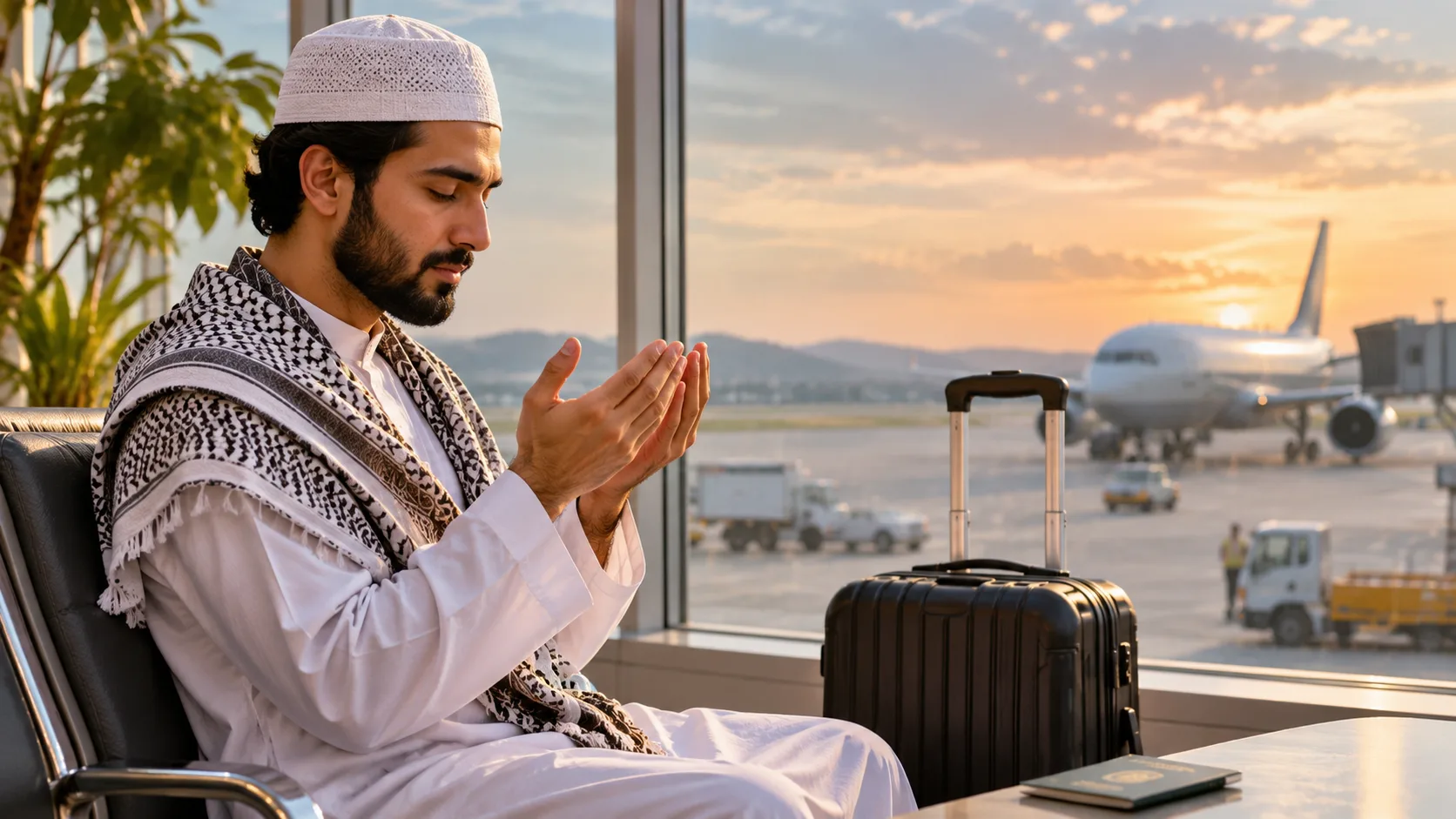
Imagine preparing for a long journey. Your bags are packed, your tickets are ready, and your family is saying goodbye. However, somewhere between the excitement and preparation, you remember that you have forgotten the exact words of the travel dua.
Travelling can bring excitement, but it also involves uncertainty. Whether you are visiting another city, travelling abroad, or returning home, you may naturally feel concerned about your safety and the well-being of your loved ones.
Reciting Safar Ki Dua is a beautiful way to remember Allah before beginning your journey. Understanding its meaning, correct pronunciation, and importance can help you travel with gratitude, spiritual awareness, and trust in Allah.
What Is Safar Ki Dua?
Safar Ki Dua is an Islamic supplication recited when beginning a journey. The Arabic word “Safar” means travel or journey, while “Dua” refers to asking Allah for help, mercy, blessings, and guidance.
Muslims recite this supplication to express gratitude to Allah for providing the means of transportation. It also reminds believers to remain humble and recognize their dependence on Allah throughout their journey.
The commonly recited short travel dua comes from Surah Az-Zukhruf, verses 13–14. A longer supplication taught by Prophet Muhammad (ﷺ) is recorded in Sahih Muslim, Hadith 1342.
Safar Ki Dua in Arabic
Many people remember hearing the travel dua during childhood but struggle to recall its exact wording. Learning the correct Arabic text makes it easier to recite this supplication accurately before travelling.
The following is the commonly recited short Safar Ki Dua:
سُبْحَانَ الَّذِي سَخَّرَ لَنَا هَٰذَا وَمَا كُنَّا لَهُ مُقْرِنِينَ وَإِنَّا إِلَىٰ رَبِّنَا لَمُنْقَلِبُونَ
These words come from Surah Az-Zukhruf, verses 13–14. They express gratitude to Allah for making transportation available to us and remind us that we will ultimately return to Him.
If you find Arabic pronunciation difficult, listen to a reliable recitation and practice each phrase separately. Understanding the correct pronunciation gradually is more helpful than rushing through unfamiliar words.
Safar Ki Dua in Roman English
Reading Arabic can be challenging for beginners who have not yet developed their reading skills. Roman English transliteration provides a helpful starting point for learning the sounds and remembering the supplication.
Subhanalladhi sakhkhara lana hadha wa ma kunna lahu muqrineen, wa inna ila Rabbina lamunqaliboon.
You can divide the dua into smaller sections and practice each part before combining them. Repeating short phrases regularly makes memorization easier and helps build confidence.
Remember that Roman English cannot perfectly represent every Arabic sound. Learning from a knowledgeable teacher or listening to accurate Arabic recitation can help improve your pronunciation over time.
Safar Ki Dua with Urdu Translation
Reciting a supplication without understanding its meaning can make it difficult to appreciate its spiritual message. An Urdu translation helps Urdu-speaking readers connect with the words they recite before travelling.
پاک ہے وہ ذات جس نے اس سواری کو ہمارے لیے مسخر کر دیا، حالانکہ ہم خود اسے قابو میں لانے کی طاقت نہیں رکھتے تھے، اور بے شک ہم اپنے رب کی طرف لوٹنے والے ہیں۔
This supplication reminds believers that transportation is a blessing from Allah. It encourages gratitude rather than taking the convenience of modern travel for granted.
Understanding the Urdu meaning can also help parents teach children about the importance of Islamic travel etiquette. Explaining the message in familiar language makes learning more meaningful.
Safar Ki Dua with English Translation
People who do not understand Arabic or Urdu may find an English translation particularly helpful. Knowing what you are saying allows you to reflect on the supplication instead of simply repeating memorized words.
English meaning: Glory belongs to Allah, who made this means of transport available to us, although we could not have mastered it ourselves. Indeed, we will return to our Lord.
The first part expresses gratitude for Allah’s blessings and the opportunities He provides. The second part reminds believers that their ultimate return is to Allah.
Together, these meanings encourage humility, thankfulness, and spiritual awareness. They remind Muslims that even ordinary activities, such as travelling to another city, provide opportunities to remember Allah.
What Is the Complete Safar Ki Dua from Hadith?
Many Muslims are familiar with the short Quranic travel supplication but may not know the longer dua recorded in authentic Islamic teachings. The complete supplication includes additional requests for righteousness, ease, and protection.
According to Sahih Muslim 1342, Prophet Muhammad (ﷺ) would say Allahu Akbar three times when setting out on a journey upon his mount. He would then recite the Quranic words followed by the following supplication.
Complete Travel Dua in Arabic
اللَّهُ أَكْبَرُ، اللَّهُ أَكْبَرُ، اللَّهُ أَكْبَرُ
سُبْحَانَ الَّذِي سَخَّرَ لَنَا هَذَا وَمَا كُنَّا لَهُ مُقْرِنِينَ، وَإِنَّا إِلَى رَبِّنَا لَمُنْقَلِبُونَ.
اللَّهُمَّ إِنَّا نَسْأَلُكَ فِي سَفَرِنَا هَذَا الْبِرَّ وَالتَّقْوَى، وَمِنَ الْعَمَلِ مَا تَرْضَى.
اللَّهُمَّ هَوِّنْ عَلَيْنَا سَفَرَنَا هَذَا، وَاطْوِ عَنَّا بُعْدَهُ.
اللَّهُمَّ أَنْتَ الصَّاحِبُ فِي السَّفَرِ، وَالْخَلِيفَةُ فِي الْأَهْلِ.
اللَّهُمَّ إِنِّي أَعُوذُ بِكَ مِنْ وَعْثَاءِ السَّفَرِ، وَكَآبَةِ الْمَنْظَرِ، وَسُوءِ الْمُنْقَلَبِ فِي الْمَالِ وَالْأَهْلِ.
Complete Travel Dua in Roman English
Allahu Akbar, Allahu Akbar, Allahu Akbar.
Subhanalladhi sakhkhara lana hadha wa ma kunna lahu muqrineen, wa inna ila Rabbina lamunqaliboon.
Allahumma inna nas’aluka fi safarina hadhal-birra wat-taqwa, wa minal-amali ma tarda.
Allahumma hawwin alayna safarana hadha, watwi anna bu’dahu.
Allahumma antas-sahibu fis-safar, wal-khalifatu fil-ahl.
Allahumma inni a’udhu bika min wa’tha’is-safar, wa ka’abatil-manzar, wa su’il-munqalabi fil-mali wal-ahl.
English Meaning of the Complete Dua
Allah is the Greatest, Allah is the Greatest, Allah is the Greatest.
Glory belongs to Allah, who made this means of transport available to us, though we could not have mastered it ourselves. Indeed, we will return to our Lord.
O Allah, during this journey, we ask You for goodness, piety, and actions that please You. O Allah, ease this journey for us and make its distance easier to cover.
O Allah, You are our companion during travel and the guardian of our family. I seek Your protection from the hardships of travel, distressing sights, and returning to find misfortune affecting my wealth or family.
Source: Sahih Muslim 1342.
Why Is Safar Ki Dua Important in Islam?
Travelling often takes people away from familiar surroundings and everyday routines. Unexpected delays, changing weather, and transportation difficulties can create uncertainty, even when a journey is carefully planned.
The Islamic travel supplication encourages believers to turn to Allah during these circumstances. It reminds Muslims to ask for ease, maintain good intentions, and remain mindful of their responsibilities.
Reciting the dua also strengthens awareness of Allah’s blessings. However, making a supplication does not replace practical safety measures or guarantee that a journey will be free from difficulties.
When Should You Recite Safar Ki Dua?
Some people are unsure whether the travel dua should be recited before leaving home or after entering a vehicle. Understanding the prophetic practice helps clarify the appropriate time for this supplication.
The authentic narration describes Prophet Muhammad (ﷺ) reciting the dua after mounting his camel when beginning a journey. Today, Muslims can follow this practice when boarding their chosen means of transportation.
You can also make personal supplications before leaving home and throughout your journey. If you forget to recite the travel dua at departure, you can remember Allah and make dua when you recall it.
Can You Recite Safar Ki Dua for Every Type of Travel?
Modern transportation is very different from the forms of travel available during the lifetime of Prophet Muhammad (ﷺ). This difference sometimes raises questions about whether the same supplication applies today.
The Quranic travel supplication expresses gratitude to Allah for making transportation available. Its meaning remains relevant whether someone travels using traditional or modern means of transport.
You can recite the travel dua when travelling by:
- Car or taxi.
- Bus or coach.
- Train.
- Airplane.
- Boat or ship.
- Other suitable means of transportation.
The type of transportation does not change the fundamental message of gratitude, humility, and remembrance of Allah.
Safar Ki Dua for Travelling by Car
Road journeys can involve traffic, unfamiliar routes, and unexpected delays. These circumstances may cause concern, particularly when travelling long distances with family members.
Before beginning your journey, recite the travel supplication and ask Allah for ease and protection. Passengers can also make dua for the safety and well-being of everyone travelling together.
Combine spiritual preparation with responsible travel habits. Wearing seat belts, avoiding distractions, following traffic regulations, and ensuring the vehicle is properly maintained remain important parts of travelling safely.
Safar Ki Dua for Travelling by Airplane
Air travel can make some passengers nervous, especially when they are flying for the first time. Unfamiliar procedures and spending several hours away from familiar surroundings may contribute to uncertainty.
Muslims can recite the same travel supplication when boarding an airplane. There is no need to invent a separate dua specifically for modern aircraft when the established supplication already expresses relevant meanings.
Prepare your travel documents, follow airline safety instructions, and arrive at the airport with sufficient time. Reciting the dua alongside practical preparation can help you approach your journey with greater reassurance.
What Are the Spiritual Benefits of Reciting Safar Ki Dua?
Many people focus entirely on tickets, luggage, accommodation, and transportation when preparing for a trip. Although these arrangements are important, spiritual preparation also deserves attention.
Reciting the travel dua encourages Muslims to remain connected with Allah throughout their journey. It provides an opportunity to reflect on gratitude, dependence on Allah, and the importance of righteous actions.
Some spiritual benefits associated with this practice include:
- Remembering Allah before beginning a journey.
- Expressing gratitude for transportation and other blessings.
- Asking Allah for protection and ease.
- Strengthening trust in Allah.
- Following an established prophetic practice.
- Remembering the importance of righteousness and piety.
These benefits relate to worship and spiritual awareness rather than a promise that travellers will never experience difficulties.
What Dua Should You Recite When Returning from a Journey?
Returning home after a long journey often brings feelings of happiness and relief. However, many travelers remember the departure supplication while overlooking the words associated with returning.
According to Sahih Muslim 1342, Prophet Muhammad (ﷺ) would recite the travel supplication upon returning and add the following words.
آيِبُونَ تَائِبُونَ عَابِدُونَ لِرَبِّنَا حَامِدُونَ
Roman English: Ayiboona, ta’iboona, ‘abidoona, li-Rabbina hamidoon.
English meaning: We return in repentance, worshipping our Lord and praising Him.
Urdu translation: ہم واپس آنے والے، توبہ کرنے والے، عبادت کرنے والے اور اپنے رب کی حمد کرنے والے ہیں۔
This supplication reminds believers to express gratitude when returning from a journey. Remembering Allah should remain part of both departure and arrival.
How to Memorize Safar Ki Dua Easily
Memorizing an Arabic supplication may initially feel challenging, especially when you are unfamiliar with certain words. Trying to learn the entire dua at once can make the process unnecessarily difficult.
Start with the short Quranic travel supplication before learning the complete dua from Hadith. Understanding the meaning of each phrase can help you remember its wording more naturally.
Follow these simple memorization steps:
- Read the Arabic text carefully.
- Listen to an accurate recitation.
- Divide the dua into smaller phrases.
- Repeat each phrase at a comfortable pace.
- Learn the meaning of each section.
- Combine the phrases gradually.
- Review the supplication regularly.
There is no prescribed repetition count for this memorization method. Practice at your own pace and focus on developing accurate pronunciation.
How to Teach Safar Ki Dua to Children
Children may struggle to remember unfamiliar Arabic words when learning through repetition alone. Making the supplication understandable and relevant to everyday activities can improve their interest.
Parents can recite the travel dua together with their children before beginning a family journey. Explaining that transportation is a blessing from Allah helps children understand why Muslims practice this form of remembrance.
Keep learning sessions short, encouraging, and age-appropriate. Rather than expecting immediate memorization, help children become familiar with the words and their meaning through regular, positive experiences.
Important Islamic Travel Etiquette to Remember
Preparing for a journey involves more than memorizing a supplication. Islam encourages believers to maintain good character, fulfill their responsibilities, and treat others respectfully while travelling.
Travel difficulties may test a person’s patience, especially when dealing with delays, crowded transportation, or unfamiliar surroundings. Maintaining kindness and good manners remains important during these situations.
Consider the following Islamic travel practices:
- Begin your journey with a good intention.
- Remember Allah and make sincere supplications.
- Plan how to fulfill your daily prayers.
- Respect fellow passengers and transportation staff.
- Choose suitable and lawful food.
- Remain patient during unexpected delays.
- Take reasonable precautions for personal safety.
- Express gratitude when returning home.
Islam also provides certain concessions for qualifying travelers regarding prayer and fasting. Consult a knowledgeable Islamic scholar about the rulings applicable to your circumstances.
Common Mistakes to Avoid When Reciting Safar Ki Dua
Learning Islamic supplications from unverified social media posts can sometimes lead to incorrect wording or misunderstandings. People may also confuse recommended practices with compulsory religious requirements.
One common misunderstanding is believing that a specific number of repetitions guarantees protection. Another is assuming that reciting the travel dua removes the need for responsible planning and ordinary safety precautions.
Avoid spreading unsupported religious claims or treating a forgotten supplication as a sign that something bad will happen. Focus instead on authentic teachings, sincere intentions, gratitude, and responsible travel habits.
Conclusion
Safar Ki Dua is a meaningful Islamic supplication that reminds Muslims to remember Allah before beginning a journey. Its words encourage gratitude, humility, righteousness, and trust in Allah during both familiar and unfamiliar experiences.
Whether you are travelling by car, train, airplane, or another means of transportation, understanding the dua can make its recitation more meaningful. Combining spiritual preparation with responsible safety measures reflects a balanced approach to travelling.
Start by memorizing the short Quranic travel dua and understanding its translation. Gradually learn the complete supplication from Hadith and make remembering Allah a regular part of your journeys.
May Allah grant you ease, protection, and blessings throughout your travels. Ameen.
Frequently Asked Questions
What is the correct Safar Ki Dua?
The commonly recited Safar Ki Dua begins with “Subhanalladhi sakhkhara lana hadha.” It comes from Surah Az-Zukhruf, verses 13–14, and forms part of the complete travel supplication.
Is Safar Ki Dua mentioned in the Quran?
Yes, the commonly recited short travel supplication appears in Surah Az-Zukhruf, verses 13–14. The complete prophetic travel dua is recorded in Sahih Muslim 1342.
Can I recite Safar Ki Dua in Urdu?
You can make personal supplications to Allah in Urdu or another language you understand. Learning the original Arabic wording is encouraged when following the established prophetic supplication.
Is reciting Safar Ki Dua compulsory?
Reciting the travel dua is a recommended Sunnah practice rather than a compulsory obligation. Forgetting to recite it does not mean that your journey will be unsafe.
Can I recite Safar Ki Dua during a short journey?
Yes, you can remember Allah and recite the Quranic supplication when using transportation. Its message of gratitude and remembrance is relevant to both short and long journeys.