

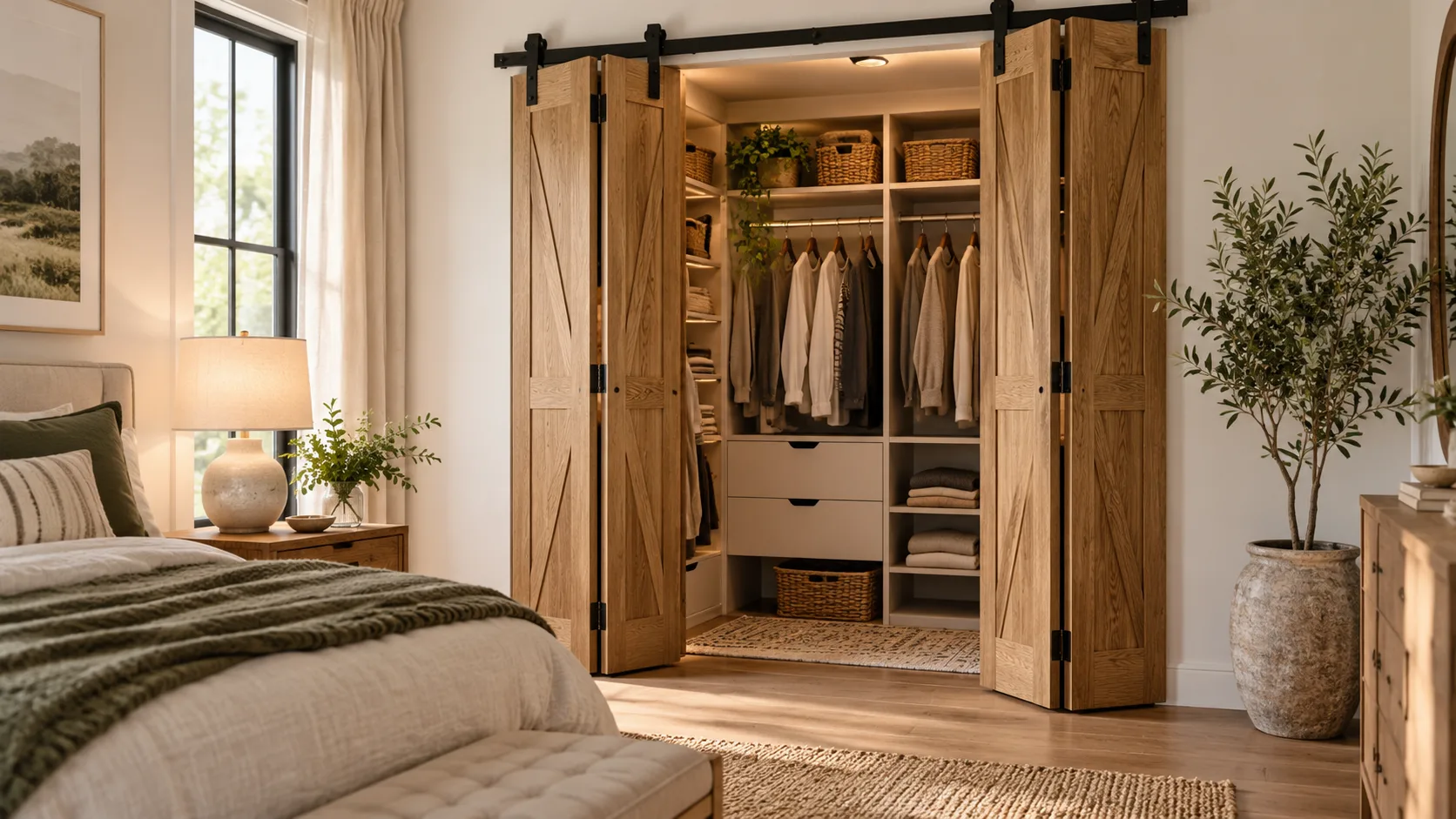
What Is a Folding Barn Door?
A folding barn door is a space-saving interior door that combines the rustic appearance of traditional barn doors with a convenient folding mechanism. Unlike standard swinging doors, folding barn doors use connected panels that fold together when opened. This design helps reduce the amount of space required for door movement while adding an attractive architectural feature to the home.
Folding barn doors are commonly used in bedrooms, closets, laundry rooms, home offices, and other interior spaces where traditional doors may be inconvenient. They are available in various materials, finishes, and configurations to complement different decorating styles. Homeowners can choose from rustic wooden panels, modern glass designs, or painted doors depending on their preferences.
One of the biggest advantages of folding barn doors is their ability to combine practical functionality with decorative appeal. They can help organize interior spaces while creating visual interest around doorways. Understanding different styles, installation requirements, and space-saving possibilities can help homeowners select folding barn doors that suit their needs and interior design.
How Do Folding Barn Doors Work?
Folding barn doors operate through a system of connected panels, hinges, and specialized hardware. Depending on the design, the panels may move along an overhead track or use a combination of pivot points and guide mechanisms. As the door opens, the connected sections fold together, creating a more compact arrangement than a conventional swinging door.
Some folding barn door systems resemble traditional bifold closet doors but feature decorative barn-style panels and exposed hardware. Others use specialized sliding mechanisms that allow multiple sections to fold toward one or both sides of the opening. The exact movement depends on the door configuration, hardware design, and available mounting space.
A properly installed folding barn door should move smoothly without excessive resistance or misalignment. Quality hinges, compatible tracks, and correctly sized panels contribute to dependable operation. Because folding systems contain multiple moving components, following manufacturer specifications is important for maintaining functionality and preventing unnecessary wear over time.
Benefits of Installing Folding Barn Doors
Folding barn doors offer several advantages for homeowners seeking attractive and practical interior door solutions. Their compact opening mechanism can reduce the floor space required compared with traditional hinged doors. This makes them useful in rooms where furniture placement, narrow passages, or limited clearance creates challenges for standard door designs.
Another benefit is their ability to add architectural character without completely changing the room layout. Folding barn doors can introduce natural wood textures, decorative patterns, and stylish hardware into otherwise simple interiors. They work particularly well in farmhouse, rustic, transitional, and contemporary homes when their finishes coordinate with surrounding materials.
Folding barn doors also provide flexibility in how different spaces are separated. They can conceal storage areas, divide adjoining rooms, or provide access to closets without requiring a large swinging door. However, privacy and sound insulation depend on the specific system, making it important to evaluate functional requirements before installation.
Rustic Wooden Folding Barn Door Styles
Rustic wooden folding barn doors remain popular because they bring warmth, texture, and traditional character into interior spaces. Natural wood grains, visible knots, and weathered finishes create an inviting appearance associated with farmhouse and country-inspired designs. These doors can become noticeable decorative features while serving a practical purpose in everyday household routines.
Reclaimed-style wood finishes are particularly attractive in rooms featuring exposed beams, natural flooring, or vintage furniture. Traditional plank arrangements and cross-brace patterns can reinforce the barn-inspired appearance. Homeowners may choose light oak tones for a softer look or deeper brown finishes to create stronger contrast against neutral-colored walls.
When choosing rustic wood doors, consider the room’s overall color palette and architectural details. Heavily distressed finishes may complement traditional interiors but appear visually busy in minimalist spaces. Selecting appropriate wood construction and durable finishing products helps maintain the door’s appearance while supporting reliable performance under normal indoor conditions.
Modern Folding Barn Door Designs
Modern folding barn doors offer a cleaner interpretation of traditional barn-style doors. Instead of heavily textured wood and decorative cross-bracing, contemporary designs often feature smooth panels, simple geometric patterns, and understated finishes. These doors work well in homes with minimal furniture, neutral colors, and streamlined architectural details.
Black folding barn doors can create a striking appearance against light-colored walls. White or soft gray finishes provide a more subtle option that blends with modern trim and cabinetry. Some contemporary designs also incorporate glass panels, narrow metal frames, or mixed materials to create a distinctive architectural feature.
Modern folding barn doors are especially useful when homeowners want a decorative element without overwhelming the room. Choosing simple hardware and coordinating finishes can help maintain a balanced appearance. The overall design should complement nearby furniture, flooring, and lighting rather than competing with existing decorative features.
Farmhouse-Style Folding Barn Doors
Farmhouse-style folding barn doors combine traditional charm with practical space-saving functionality. They commonly feature painted wood, horizontal planks, or decorative patterns inspired by agricultural buildings. Their familiar appearance makes them suitable for kitchens, laundry rooms, pantries, bedrooms, and other spaces where homeowners want a welcoming interior design.
White farmhouse folding doors are a popular choice because they complement neutral walls and natural wood furniture. Light gray and soft beige finishes can also create a relaxed appearance. Homeowners seeking stronger contrast may prefer darker stained wood or black hardware that highlights the shape and decorative details of the door.
A successful farmhouse design often combines traditional materials with simple modern elements. For example, a white folding barn door with understated black hardware can create a clean appearance without excessive decoration. Matching the door’s finish with surrounding baseboards, cabinets, or window trim helps create a coordinated interior.
Glass Folding Barn Doors for Bright Interiors
Glass folding barn doors are an attractive option for homeowners who want to separate spaces without blocking natural light. Their transparent or translucent panels help maintain visual connections between rooms while adding contemporary architectural detail. These designs can be particularly useful for home offices, living areas, and interior spaces with limited windows.
Clear glass panels create an open appearance and allow light to travel between adjoining rooms. Frosted or textured glass provides additional visual privacy while maintaining some light transmission. Homeowners can choose black metal-style frames, painted wooden frames, or other finishes depending on the overall design of their interiors.
Glass folding barn doors require careful consideration of safety, maintenance, and privacy. Suitable safety glazing should be used where required by applicable building standards. Fingerprints and dust may be more noticeable on glass surfaces, while gaps around folding panels can limit sound isolation compared with certain conventional doors.
Folding Barn Doors for Small Bedrooms
Small bedrooms often have limited floor space, making door placement an important design consideration. Traditional swinging doors require clearance that may interfere with furniture arrangements or storage areas. Folding barn doors can reduce this inconvenience by allowing connected panels to fold into a relatively compact position.
A folding barn door can work well for bedroom closets, dressing areas, or certain room entrances. Light-colored finishes may help create a visually open appearance, while natural wood can add warmth to simple interiors. Choosing a design that coordinates with existing furniture helps maintain a comfortable and balanced bedroom atmosphere.
Privacy should remain a priority when considering folding doors for bedroom entrances. Some barn-style systems leave small gaps around their edges and may not block sound as effectively as traditional doors. Homeowners should compare hardware configurations, panel construction, and closing mechanisms before selecting a system for spaces requiring greater privacy.
Folding Barn Doors for Closets
Closets are among the most practical locations for folding barn doors because their compact movement helps preserve usable floor space. Traditional closet doors can interfere with nearby beds, cabinets, or other furniture when opened. Folding panels provide convenient access while adding decorative detail to what might otherwise be a basic storage opening.
Wooden folding closet doors can complement traditional bedrooms, while smooth painted panels work well in contemporary interiors. Mirrored or partially glazed designs may also be available for homeowners seeking additional functionality. Selecting appropriately sized panels helps ensure that the folded sections do not block access to important storage compartments.
When planning a folding closet door, consider the width of the opening and the amount of usable access required. Some bifold configurations partially occupy the opening even when fully folded. Comparing different hardware systems can help homeowners select a design that provides convenient access without unnecessarily restricting the closet interior.
Folding Barn Doors for Laundry Rooms
Laundry rooms often contain appliances, storage shelves, and cleaning supplies within a relatively compact area. A folding barn door can provide separation without requiring the same swing clearance as a conventional hinged door. This makes it an attractive option for laundry spaces located near hallways, kitchens, or shared living areas.
Painted wood or moisture-resistant door materials may be suitable for laundry rooms depending on ventilation and humidity conditions. White, gray, and natural wood finishes can complement cabinets, countertops, and flooring. Choosing a durable finish also helps the door withstand regular handling and occasional exposure to household moisture.
Laundry room doors should allow appropriate airflow and access according to appliance manufacturer requirements and applicable building codes. Some appliances require specific ventilation arrangements that should not be obstructed by decorative doors. Homeowners should confirm these needs before installing a folding barn door around washing or drying equipment.
Folding Barn Doors for Home Offices
Home offices benefit from doors that provide separation while maintaining an attractive and organized environment. Folding barn doors can help define a workspace without requiring extensive changes to the surrounding room layout. They are particularly useful for offices positioned near living areas where a traditional swinging door might interfere with furniture.
Modern folding barn doors with smooth panels can create a professional appearance suited to contemporary workspaces. Glass panels may help maintain natural light, while solid wood offers greater visual privacy. Black hardware, neutral finishes, and simple panel designs can coordinate with office desks, shelving, and other furnishings.
Although folding doors provide a physical boundary, they may not offer the same sound reduction as a well-fitted conventional door. Homeowners who frequently attend online meetings or require a quiet environment should evaluate acoustic performance carefully. Suitable seals and solid panels may improve comfort, but results depend on the complete door system.
Folding Barn Doors for Kitchens and Pantries
Folding barn doors can be useful for kitchen pantries because they create decorative access points without requiring large swinging clearances. Pantry openings are often located near countertops, cabinets, or narrow walkways. A folding system can help improve convenience while keeping stored ingredients and household supplies out of sight.
Rustic wooden doors complement farmhouse kitchens, while smooth painted designs suit modern cabinetry. Black or natural wood finishes can add contrast when used alongside white kitchen cabinets. Homeowners may also select subtle panel patterns that coordinate with nearby doors and decorative trim.
Before installing folding pantry doors, consider how the panels move when fully opened. They should not interfere with drawers, appliance doors, or frequently used kitchen walkways. Durable finishes and easy-to-clean surfaces are especially practical in cooking areas where grease, fingerprints, and household moisture may accumulate.
Space-Saving Folding Barn Door Ideas for Narrow Hallways
Narrow hallways can present challenges when traditional doors swing into busy circulation areas. Folding barn doors offer an alternative by reducing the amount of floor space occupied during opening. Their compact movement can make adjoining rooms easier to access when the available clearance is limited.
Hallway folding doors may be used for closets, utility spaces, or certain room entrances. Simple white panels can blend with surrounding walls, while natural wood adds decorative warmth. Choosing a finish that matches existing trim can create a cohesive appearance without making the hallway feel visually crowded.
However, folded panels still occupy some space near the doorway and may reduce the clear opening width. Homeowners should verify that the chosen system does not obstruct required passage widths or emergency exits. Proper measurements and compliance with applicable building requirements are particularly important in narrow interior circulation areas.
Folding Barn Door Materials and Construction
Folding barn doors are manufactured from different materials, including solid wood, engineered wood, MDF, glass, and metal-framed assemblies. Each material offers advantages depending on appearance, budget, durability, and installation requirements. Understanding these differences helps homeowners select doors that suit both the room’s style and everyday functional needs.
Solid wood provides natural character and can be stained or painted to match existing interior finishes. Engineered wood and MDF products may offer smooth surfaces and consistent dimensions at different price points. Glass and metal-framed designs introduce modern styling, although their weight and hardware requirements can vary significantly.
The quality of hinges, tracks, and supporting components is just as important as the door material. Heavy panels require suitable hardware designed for their combined weight and folding movement. Homeowners should compare manufacturer specifications and choose complete systems that provide reliable operation rather than combining incompatible parts.
Folding Barn Door Sizes and Dimensions
Folding barn door sizes vary according to the doorway opening and the number of connected panels. Common interior door heights are around 80 inches, although taller custom options are available. Panel widths may vary considerably because a folding system divides the overall opening into smaller sections rather than using one full-width door.
A standard closet opening might use two or four folding panels, depending on the selected hardware configuration. Wider openings may require additional panels or specialized support systems. The complete assembly must account for panel thickness, hinge spacing, track dimensions, and the clearance needed for folding movement.
Accurate measurements are essential before purchasing a folding barn door system. Homeowners should record the opening width, height, surrounding wall space, and any nearby obstacles. Manufacturer installation guides provide the specific clearances and dimensions required for each system, making them more reliable than general sizing assumptions.
Folding Barn Door Hardware and Track Systems
Folding barn door hardware typically includes hinges, tracks, rollers, pivots, and mounting brackets designed to support the door’s movement. The exact components depend on whether the system uses overhead sliding hardware, traditional bifold mechanisms, or another configuration. Compatible hardware is essential for smooth operation and long-term reliability.
Exposed black metal tracks are popular for rustic and industrial-inspired folding doors because they create a distinctive decorative appearance. Concealed track systems provide a cleaner look that may suit contemporary interiors. Homeowners can also choose different handles and decorative finishes to coordinate with surrounding furniture and interior hardware.
When comparing hardware, check the manufacturer’s stated weight capacity and compatibility requirements. Door thickness, panel quantity, mounting surfaces, and track length can all affect performance. Heavy folding doors and unfamiliar hardware systems are best installed by qualified professionals who can confirm proper support and safe operation.
How to Install a Folding Barn Door
Installing a folding barn door requires accurate measurements, suitable mounting hardware, and careful alignment of the connected panels. The installation process varies depending on the selected product and whether it uses wall-mounted tracks or conventional bifold hardware. Reviewing the manufacturer’s instructions before purchasing helps homeowners understand the required preparation and installation conditions.
The surrounding doorway must provide adequate support for the door’s weight and operating mechanism. Some systems require secure attachment to structural framing rather than decorative trim or unsupported wall surfaces. Incorrect mounting can create alignment problems, damage surrounding materials, or allow heavy components to become unstable during use.
Professional installation is often the safest choice for heavy wooden doors, glass panels, or complicated folding track systems. Installers can evaluate mounting conditions, confirm hardware compatibility, and check that the panels move correctly. A properly fitted system should open and close smoothly without interfering with nearby furniture or essential walkways.
How Much Do Folding Barn Doors Cost?
The cost of folding barn doors depends on materials, dimensions, panel design, hardware quality, and installation complexity. Basic manufactured bifold doors with barn-inspired styling are usually more affordable than custom solid wood or glass systems. Decorative tracks, specialty hinges, and oversized panels may increase the total project cost.
The following table provides broad illustrative price ranges in US dollars. These estimates are intended for preliminary budgeting rather than confirmed retail quotations, and actual costs vary by supplier, location, and product specifications.
| Folding Barn Door Type | Approximate Door Cost |
|---|---|
| Basic MDF folding door | $100–$300 |
| Painted wooden folding door | $200–$600 |
| Solid wood folding barn door | $300–$1,000 |
| Glass folding barn door | $400–$1,500 |
| Custom folding barn door system | $800–$2,500+ |
| Specialized folding hardware | $75–$400+ |
Installation expenses are additional when professional labor is required. Homeowners should consider whether hardware, finishing materials, delivery, and doorway modifications are included in the quoted price. Comparing complete product packages can help identify the best option for the available budget without overlooking important accessories or installation requirements.
Folding Barn Doors vs. Sliding Barn Doors
Folding and sliding barn doors share similar decorative styles but operate in different ways. Sliding barn doors typically move horizontally along a wall-mounted track, while folding barn doors use connected panels that fold together. These differences affect the amount of wall space needed, the available opening width, and the overall appearance.
A traditional sliding barn door generally requires sufficient clear wall space beside the doorway. Folding barn doors can reduce this requirement because their panels gather together rather than moving as one large piece. However, folding panels may project into the room or opening, depending on the chosen mechanism and configuration.
The better option depends on the room layout and intended use. Sliding doors may work well along unobstructed walls, while folding systems can be useful when adjacent wall space is limited. Homeowners should compare measurements, privacy needs, hardware requirements, and access clearance before making a final decision.
Common Folding Barn Door Mistakes to Avoid
One common mistake is purchasing a folding barn door without checking the complete opening and surrounding clearance. Homeowners may focus only on the doorway width while overlooking track space, folding movement, or nearby furniture. Incorrect sizing can result in restricted access, difficult operation, or additional installation expenses.
Another mistake is choosing hardware that cannot adequately support the door panels. Heavy solid wood and glass designs require compatible hinges, rollers, and mounting systems. Using unsuitable hardware or attaching components to weak surfaces can cause premature wear and create serious safety concerns.
Privacy and sound insulation are also frequently overlooked when selecting folding barn doors. Many designs leave gaps around the edges or between panels, reducing their ability to block noise and light. Understanding these limitations before installation helps homeowners avoid choosing unsuitable doors for bedrooms, bathrooms, or quiet workspaces.
How to Maintain and Clean Folding Barn Doors
Regular maintenance can help folding barn doors operate smoothly and maintain their appearance. Dust and debris may accumulate around tracks, hinges, and panel joints, especially in frequently used rooms. Gently cleaning accessible components according to manufacturer instructions can help prevent unnecessary resistance and maintain reliable operation.
Wooden door panels can be wiped with a soft cloth and an appropriate cleaning product. Painted MDF and engineered wood surfaces should be protected from excessive moisture, particularly around unfinished edges. Glass panels may require occasional cleaning with compatible products to remove fingerprints and maintain a clear appearance.
Hardware should be inspected periodically for loose fasteners, unusual movement, or signs of wear. Squeaking, sticking, or misaligned panels may indicate that professional adjustment is needed. Avoid forcing damaged mechanisms or attempting repairs involving heavy unsupported panels, as proper maintenance should prioritize safety alongside appearance.
Conclusion
Folding barn doors combine decorative appeal with practical space-saving functionality, making them suitable for many interior spaces. Rustic wooden styles, modern painted panels, and glass designs offer options for different decorating preferences. Their folding movement can improve access to closets, pantries, laundry rooms, and other areas where conventional doors may require too much clearance.
Choosing the right folding barn door involves considering materials, measurements, hardware, privacy, and installation requirements. Different folding systems provide varying levels of access and space efficiency, so careful planning is essential. Comparing product specifications and overall costs can help homeowners select a design that complements their home while supporting everyday functionality.
With proper installation and routine maintenance, folding barn doors can remain attractive and convenient for many years. Homeowners should prioritize compatible hardware, reliable construction, and appropriate professional assistance when necessary. The right folding barn door can improve interior organization while adding warmth, character, and visual interest to the surrounding space.
Frequently Asked Questions
Are Folding Barn Doors Good for Small Spaces?
Yes, folding barn doors can save space compared with traditional swinging doors. Their connected panels fold into a compact arrangement, making them useful for closets, pantries, and rooms with limited clearance.
Do Folding Barn Doors Need a Track?
Many folding barn door systems use overhead tracks, rollers, or pivot mechanisms. However, hardware configurations vary by manufacturer, so the required components depend on the specific door design.
Can Folding Barn Doors Be Used for Bedrooms?
Yes, folding barn doors can work for bedroom closets and some entrances. However, homeowners should consider privacy, sound insulation, and gaps around the panels before choosing them for bedroom entryways.
How Much Does a Folding Barn Door Cost?
Basic folding barn doors may cost approximately $100–$300, while custom wood or glass systems can exceed $1,500. Hardware, installation labor, and doorway modifications may increase the total expense.
Are Folding Barn Doors Better Than Sliding Barn Doors?
Folding barn doors are useful when adjacent wall space is limited, while sliding doors work well with unobstructed walls. The better option depends on opening dimensions, clearance, privacy, and design preferences.