

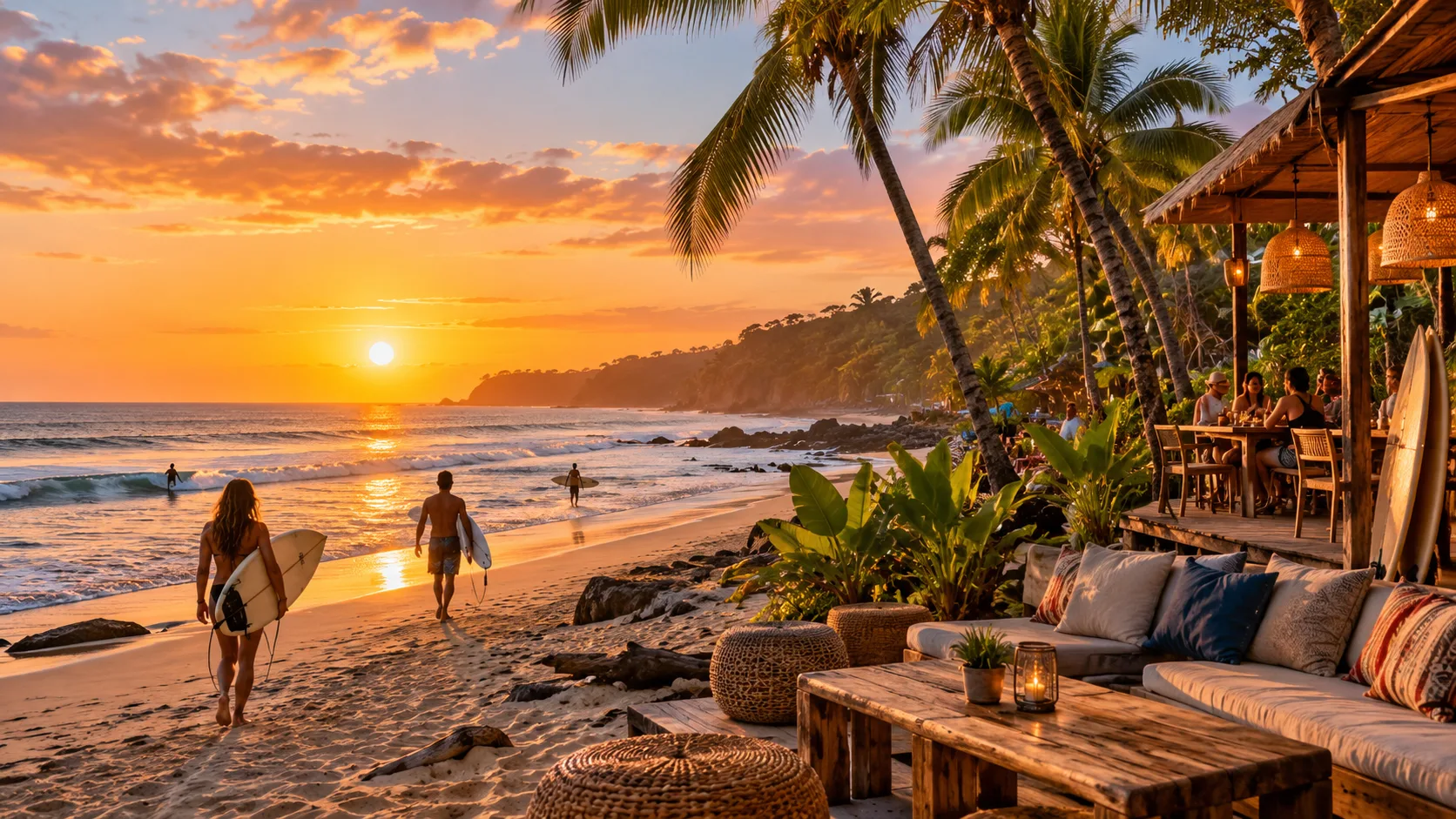
Santa Teresa Beach is one of Costa Rica’s most beautiful coastal destinations, known for its golden sands, impressive Pacific waves, and relaxed tropical atmosphere. Located on the southern Nicoya Peninsula, this charming beach community attracts surfers, nature lovers, and travelers seeking peaceful surroundings. Its combination of lush jungle, beautiful sunsets, and welcoming coastal culture makes it an unforgettable place to explore.
The best things to do in Santa Teresa Beach include surfing, visiting nearby waterfalls, exploring tropical forests, and discovering picturesque beaches. Visitors can also enjoy yoga classes, local restaurants, wildlife encounters, and scenic day trips around the peninsula. Whether you are planning an adventurous vacation or a relaxing seaside escape, Santa Teresa offers experiences for different travel interests.
Planning a trip to Santa Teresa requires understanding its seasonal weather, transportation options, and surrounding attractions. Although the destination feels remote compared with Costa Rica’s larger tourist centers, its growing collection of accommodations and activities makes visiting convenient with proper preparation. This travel guide covers the top attractions, outdoor experiences, and useful tips for enjoying Santa Teresa Beach.
Where Is Santa Teresa Beach in Costa Rica?
Santa Teresa Beach is located on the Pacific coast of Costa Rica’s Nicoya Peninsula in the Puntarenas province. The area is known for its long sandy coastline, tropical vegetation, and relaxed beach-town atmosphere. Unlike major resort destinations, Santa Teresa features a collection of small accommodations, local businesses, restaurants, and surf-related services spread along the coastal road.
The community sits near Playa Carmen, Mal País, and Playa Hermosa, which offer additional beaches and attractions. These neighboring destinations create a scenic coastal region where visitors can explore different landscapes without traveling across the country. The surrounding hills and tropical forests also provide opportunities to experience Costa Rica’s remarkable natural environment and wildlife.
Reaching Santa Teresa usually involves traveling through the Nicoya Peninsula by road or combining ferry services with ground transportation. The journey can take several hours from major international airports, depending on the chosen route and road conditions. Although reaching the destination requires planning, the beautiful scenery and relaxed atmosphere make the journey worthwhile for many travelers.
Relax on the Beautiful Sands of Santa Teresa Beach
Santa Teresa Beach is famous for its broad sandy shoreline, impressive ocean scenery, and relaxed coastal environment. Tall palm trees and tropical greenery create a beautiful backdrop, while the Pacific Ocean provides constantly changing views throughout the day. Visitors can enjoy long beach walks, photography, peaceful relaxation, and unforgettable sunsets along this picturesque stretch of coastline.
The beach is particularly attractive during early mornings when temperatures are often more comfortable and the surroundings feel quieter. Walking along the sand provides opportunities to admire natural scenery and observe surfers enjoying the waves. Some sections feature rocky areas, so visitors should pay attention to tidal conditions and choose suitable places for relaxing near the water.
Swimming requires caution because Santa Teresa can experience powerful waves and dangerous rip currents. Conditions vary throughout the coastline, and not every section is suitable for casual swimming. Visitors should follow local safety advice, avoid entering unfamiliar water conditions, and never assume that a beautiful beach is automatically safe for swimming.
Experience Surfing at Santa Teresa’s Famous Beaches
Surfing is one of the main reasons travelers visit Santa Teresa, which has developed an international reputation for its Pacific waves. Several beach breaks provide opportunities for surfers with different experience levels, although conditions can become challenging. The combination of warm water, scenic surroundings, and established surf facilities makes this destination attractive to people interested in ocean sports.
Playa Carmen is often associated with surf lessons, while sections of Playa Santa Teresa attract more experienced surfers depending on wave conditions. Surf schools offer instruction and information about local breaks, equipment, and ocean safety. Beginners should choose professionally supervised lessons and suitable conditions rather than entering powerful waves without appropriate preparation.
Experienced surfers can find opportunities throughout the year, although swell size and wave characteristics change seasonally. Local instructors can help visitors understand which beaches match their abilities and current conditions. Even travelers who do not surf can enjoy watching skilled surfers from the shore while appreciating the energetic atmosphere that defines Santa Teresa’s coastal culture.
Visit Playa Hermosa for Peaceful Coastal Scenery
Playa Hermosa is a beautiful beach north of Santa Teresa, known for its scenic setting and relatively relaxed atmosphere. Its wide sandy areas, tropical surroundings, and attractive ocean views make it an appealing destination for nature lovers. Visitors often appreciate the quieter environment compared with the busier sections of Santa Teresa’s main coastline.
The beach offers opportunities for peaceful walks, photography, and watching the waves from the shore. Surfing is also popular when conditions are suitable, although visitors should evaluate the ocean carefully before entering. Natural shade can be limited in some areas, making sun protection and drinking water useful for comfortable beach visits.
Playa Hermosa is especially attractive during late afternoons when the changing light creates beautiful coastal scenery. Travelers can combine a visit with nearby cafés or other destinations along the peninsula. Its natural setting makes it a worthwhile addition to a Santa Teresa itinerary, particularly for visitors who enjoy less-developed beaches and outdoor relaxation.
Explore Mal País and Its Natural Attractions
Mal País is a quieter coastal community located south of Santa Teresa, offering a different atmosphere from the area’s main tourist center. Its rocky shoreline, tropical forests, and traditional fishing connections give it a distinctive character. The region appeals to travelers interested in natural scenery, peaceful coastal walks, and exploring smaller communities around the Nicoya Peninsula.
One of the area’s attractions is its collection of rocky coastal formations and tide pools that become visible during suitable low-tide conditions. These natural features can provide interesting opportunities for photography and observing coastal environments. However, sharp rocks, slippery surfaces, and incoming waves require caution, particularly when tides begin changing.
Visitors can also explore quiet beaches and enjoy the surrounding tropical landscapes. Some areas are better suited to walking and sightseeing than swimming because of rocks and strong ocean conditions. Mal País is an excellent choice for travelers who want to experience a less crowded part of the peninsula while remaining close to Santa Teresa.
Discover Cabo Blanco Absolute Nature Reserve
Cabo Blanco Absolute Nature Reserve is an important protected area near the southern tip of the Nicoya Peninsula. Established to conserve tropical ecosystems, the reserve features forest habitats and remarkable biodiversity. It provides an interesting contrast to Santa Teresa’s beaches, allowing visitors to experience the natural landscapes that make Costa Rica famous for ecological tourism.
Wildlife enthusiasts may encounter monkeys, birds, and other tropical species while exploring authorized trails. The forest environment contains a mixture of vegetation and wildlife habitats that change with local conditions. Sightings are never guaranteed, but patient observation and responsible behavior can make a visit rewarding for travelers interested in conservation and nature.
Hiking opportunities are subject to reserve rules, weather conditions, trail availability, and opening schedules. Visitors should wear appropriate footwear, carry drinking water, and remain on designated paths. Checking current access requirements before traveling is important because protected areas may limit entry or temporarily close certain sections for environmental and safety reasons.
Take a Day Trip to Montezuma Waterfalls
Montezuma is a picturesque coastal community on the eastern side of the southern Nicoya Peninsula, within day-trip reach of Santa Teresa. It is known for its relaxed atmosphere, tropical surroundings, and impressive waterfalls. Visitors can combine a waterfall excursion with exploring the village, discovering local restaurants, and enjoying the area’s distinctive natural scenery.
The Montezuma Waterfalls are among the region’s popular outdoor attractions, featuring cascades surrounded by lush vegetation. Access involves walking along routes where conditions can become slippery or uneven, particularly after rainfall. Travelers should choose suitable footwear and follow current local guidance because the trails and water conditions can change.
For a safer visit, appreciate the waterfalls from appropriate viewing areas and avoid jumping from rocks or entering unfamiliar pools. Heavy rainfall can create strong currents and hazardous conditions. Montezuma also offers attractive beaches and a welcoming village atmosphere, making it a rewarding excursion for visitors interested in exploring beyond Santa Teresa.
Enjoy Yoga and Wellness Experiences by the Beach
Santa Teresa has become known for its relaxed wellness culture, with yoga studios and retreats located throughout the coastal community. The peaceful beaches and tropical environment create an appealing setting for activities focused on relaxation and well-being. Visitors can find opportunities to practice yoga, attend guided sessions, or enjoy quiet moments surrounded by nature.
Yoga classes may include gentle stretching, breathing exercises, and movement suitable for different experience levels. Some accommodations offer dedicated wellness spaces, while independent studios provide scheduled sessions. Choosing activities that match your comfort and ability allows you to enjoy the experience without feeling pressured to participate in demanding exercises.
Wellness experiences can also include quiet beach walks, reading, and spending time away from busy daily routines. These simple activities complement Santa Teresa’s slower coastal lifestyle and natural surroundings. Travelers do not need to book an expensive retreat to enjoy the destination’s peaceful atmosphere and create time for rest during their vacation.
Discover Local Restaurants and Costa Rican Food
Santa Teresa offers a diverse food scene influenced by traditional Costa Rican cooking and international visitors. Restaurants and cafés serve everything from local rice dishes and fresh fruit to seafood and international cuisine. The variety makes it easy for travelers to explore different flavors while enjoying the relaxed dining atmosphere of a tropical beach destination.
Traditional Costa Rican dishes worth trying include gallo pinto, a popular combination of rice and beans commonly served at breakfast. Casado is another familiar meal featuring rice, beans, vegetables, and a choice of protein. Fresh tropical fruits such as pineapple, papaya, and mango also appear frequently in breakfasts, snacks, and refreshing drinks.
Visitors can choose between simple local eateries, beachfront restaurants, and modern cafés offering different dining experiences. Exploring smaller establishments provides opportunities to try traditional food while supporting local businesses. During busy travel periods, popular restaurants may become crowded, so planning meals around your daily activities can make the experience more enjoyable.
Experience Santa Teresa’s Stunning Pacific Sunsets
Watching the sunset is one of the most memorable experiences in Santa Teresa, thanks to its west-facing Pacific coastline. As evening approaches, the sky often changes through shades of orange, pink, and purple. The combination of ocean waves, palm trees, and warm evening light creates beautiful scenery that attracts photographers and visitors.
Playa Santa Teresa and Playa Carmen are popular places to enjoy these evening views. Visitors can sit on the sand, take photographs, or enjoy a peaceful walk as daylight fades. The experience does not require an expensive activity or elaborate preparation, making it one of the most accessible attractions in the area.
Sunset conditions vary depending on cloud cover, season, and weather patterns. Arriving before sunset allows time to choose a comfortable viewing location and appreciate changing light across the water. When walking back afterward, use well-lit routes and take care near roads where pedestrian facilities may be limited.
Explore Isla Tortuga on a Boat Excursion
Isla Tortuga is a small island in the Gulf of Nicoya, known for its scenic beaches and attractive coastal environment. Boat excursions to the island are available from different parts of the peninsula, although departure locations and transfer arrangements vary. These outings can provide a different experience from Santa Teresa’s wave-exposed Pacific beaches.
Depending on the excursion and ocean conditions, activities may include relaxing on the beach, guided snorkeling, and observing marine scenery. Some tours combine transportation with meals or additional activities. Travelers should compare inclusions, departure points, and safety arrangements before choosing a trip, particularly when traveling with children or inexperienced swimmers.
Weather and sea conditions influence whether boat excursions operate as planned. Selecting a reputable operator with suitable safety equipment and clear instructions is essential for a comfortable experience. Isla Tortuga can be an enjoyable addition to a longer Santa Teresa vacation, especially for visitors interested in exploring the wider Nicoya Peninsula.
Best Time to Visit Santa Teresa Beach
The best time to visit Santa Teresa depends on whether you prefer sunny beach days, lush tropical scenery, or quieter travel periods. Costa Rica’s Pacific coast generally experiences a dry season from approximately December through April. This period is popular for outdoor sightseeing, beach relaxation, and exploring coastal attractions with less frequent rainfall.
The green season usually extends from May into November, bringing more frequent rain and vibrant vegetation. Mornings may still provide opportunities for outdoor activities, although afternoon showers and occasional prolonged rainfall can affect plans. Roads and walking routes may become muddy, while ocean conditions can change significantly depending on seasonal weather patterns.
January through March is particularly popular among travelers seeking generally drier conditions. However, accommodation demand and visitor numbers can increase during major holidays and peak travel periods. Travelers who prefer quieter surroundings may enjoy parts of the green season, provided they remain flexible and prepare for changing weather and transport conditions.
How to Get to Santa Teresa Beach
Reaching Santa Teresa requires some planning because the community is located away from Costa Rica’s largest international airports. Many travelers arrive through Juan Santamaría International Airport near San José before continuing toward the Nicoya Peninsula. The journey can involve road travel and a ferry crossing, depending on the selected transportation route.
A common option involves traveling to Puntarenas, taking the ferry to Paquera, and continuing by road toward Cóbano and Santa Teresa. Domestic flights to nearby regional airports may offer another option when suitable services are operating. Shuttle transfers, rental vehicles, and private transport arrangements are also available, with travel times depending on route conditions.
Road quality varies across the peninsula, particularly during wetter months, so travelers should allow sufficient time between connections. Some routes may include gravel surfaces, uneven sections, or limited lighting. Confirming current ferry schedules, road conditions, and accommodation directions before departure helps make the journey smoother and reduces unnecessary travel difficulties.
Where to Stay in Santa Teresa for Different Budgets
Santa Teresa offers accommodation options ranging from simple guesthouses and hostels to boutique hotels and private vacation rentals. Many properties are located near the main coastal road, while others sit within surrounding tropical gardens. Choosing the right accommodation depends on your budget, preferred atmosphere, transportation arrangements, and distance from the beach.
Travelers interested in restaurants and a lively atmosphere may prefer staying near the main Santa Teresa or Playa Carmen areas. Those seeking quieter surroundings can explore accommodation around Playa Hermosa or Mal País. Before booking, check the exact location because properties described as being in Santa Teresa may be spread across several kilometers.
Consider practical amenities such as air conditioning, reliable internet, parking, and access to restaurants or grocery stores. During busy travel seasons, booking ahead provides more accommodation choices. Reading recent guest feedback can help identify possible concerns involving road noise, construction, accessibility, or differences between advertised and actual property locations.
Essential Travel Tips for Visiting Santa Teresa
Santa Teresa is a relaxed destination, but its coastal environment requires practical preparation. Lightweight clothing, comfortable footwear, sun protection, and a reusable water bottle are useful for everyday activities. Visitors should also carry insect repellent when appropriate and prepare for sudden weather changes, particularly during the rainy season.
Transportation deserves attention because attractions and accommodation are spread along an extended coastal area. Walking is convenient for some short journeys, but certain roads have limited sidewalks and lighting. Choose transportation that suits local conditions, use established services where possible, and allow extra travel time rather than rushing between activities.
Respect local communities and natural environments throughout your visit. Dispose of waste responsibly, avoid disturbing wildlife, and follow posted beach or protected-area regulations. Keeping valuables secure, checking ocean conditions, and selecting responsible tour operators can help create an enjoyable experience while supporting safer and more sustainable travel practices.
Conclusion
Santa Teresa Beach is a beautiful Costa Rican destination offering an appealing mixture of tropical scenery, outdoor adventures, and relaxed coastal living. From its famous surfing beaches and spectacular sunsets to nearby waterfalls and protected forests, the region provides experiences for different interests. Its natural landscapes and welcoming atmosphere make it especially attractive to travelers seeking a memorable Pacific coast vacation.
The best things to do in Santa Teresa include exploring nearby communities, enjoying local food, visiting nature reserves, and discovering beautiful beaches. Travelers can also experience yoga, wildlife observation, and exciting excursions around the southern Nicoya Peninsula. Choosing activities that suit your interests and comfort level helps create a balanced holiday without unnecessary pressure or rushed sightseeing.
Whether you are visiting for a few days or planning a longer tropical escape, thoughtful preparation will improve your Santa Teresa experience. Consider seasonal weather, transportation, accommodation, and beach safety when organizing your trip. With a flexible itinerary and appreciation for Costa Rica’s natural beauty, Santa Teresa Beach can become an unforgettable highlight of your travels.
Frequently Asked Questions
Is Santa Teresa Beach worth visiting?
Yes, Santa Teresa Beach is worth visiting for its beautiful Pacific coastline, surfing opportunities, tropical scenery, and relaxed atmosphere. It is particularly appealing to nature lovers and travelers seeking coastal adventures.
What is the best time to visit Santa Teresa Beach?
December through April generally offers drier weather and popular beach conditions. The green season brings more rainfall, lush vegetation, and potentially quieter surroundings, depending on the month.
How many days should you spend in Santa Teresa?
Three to five days provides time to explore beaches, enjoy local restaurants, and visit nearby attractions. A longer stay allows additional excursions and a more relaxed travel schedule.
Can you swim at Santa Teresa Beach?
Swimming conditions vary, and powerful waves and rip currents can make some areas dangerous. Seek local safety advice, avoid unfamiliar ocean conditions, and choose supervised locations where available.
What are the best things to do near Santa Teresa?
Popular nearby attractions include Playa Hermosa, Mal País, Cabo Blanco Absolute Nature Reserve, Montezuma Waterfalls, and Isla Tortuga excursions. Each offers different opportunities for nature, sightseeing, and relaxation.